Table of Contents
ToggleDiscovering tiny jumping bugs bouncing across your countertop or bathroom floor isn’t just annoying, it’s unsettling. These minuscule pests move erratically, making them hard to catch or even get a good look at. But before reaching for the nearest can of bug spray, it’s worth identifying exactly what’s invaded the home. Different species require different approaches, and spraying blindly might not solve the problem. Most tiny jumping bugs fall into one of two categories: moisture-loving springtails or blood-feeding fleas. The good news? Both can be eliminated with the right combination of environmental changes and targeted treatment.
Key Takeaways
- Tiny jumping bugs in your house are most likely either springtails or fleas, and identifying which species is crucial since each requires different treatment approaches.
- Moisture and humidity are the primary attractants for springtails; fixing leaks, running dehumidifiers, and improving ventilation can eliminate conditions that allow these pests to thrive.
- For flea infestations, treat all pets with veterinarian-recommended products and wash pet bedding in hot water (130°F minimum) weekly for at least three weeks to break their life cycle.
- DIY solutions including vacuuming, applying food-grade diatomaceous earth, and sealing entry points can effectively manage small to moderate infestations of tiny jumping bugs.
- If tiny jumping bugs persist after 2–3 weeks of DIY efforts or cause severe reactions, contact a licensed pest control professional who can detect hidden moisture sources and provide stronger EPA-registered treatments.
- Understanding whether moisture or pets are the root cause of your jumping bug problem is essential for long-term prevention and ensuring the infestation doesn’t return.
What Are Those Tiny Jumping Bugs in Your Home?
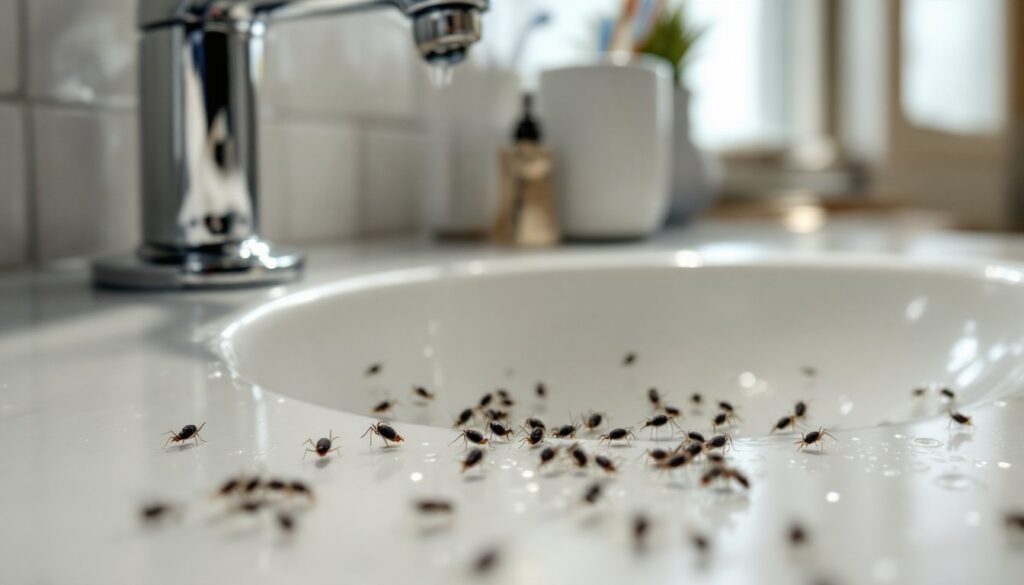
Tiny jumping bugs are typically less than 1/8 inch long, about the size of a pinhead, and use a spring-loaded mechanism or powerful hind legs to propel themselves when disturbed. They’re often mistaken for flecks of dirt or pepper until they suddenly hop away.
Two main characteristics separate jumping bugs from other common household pests. First, their size: they’re significantly smaller than ants or fruit flies. Second, their movement: rather than crawling or flying, they leap in short, quick bursts. This jumping behavior is a defense mechanism that makes them difficult to swat or trap.
Most sightings occur in areas with moisture or organic debris, bathrooms, kitchens, basements, or near potted plants. The presence of jumping bugs usually signals an underlying issue with humidity, water leaks, or decaying organic matter. They don’t typically bite humans (with one notable exception discussed below), but large populations indicate conditions that could attract other pests or contribute to mold growth.
Identifying the exact species requires close observation, ideally with a magnifying glass. Color, habitat preference, and whether pets are present all provide clues.
Common Types of Tiny Jumping Bugs Found Indoors
Springtails
Springtails (order Collembola) are wingless arthropods, usually white, gray, or black, measuring 1/16 to 1/8 inch. They’re named for the furcula, a forked appendage tucked under their abdomen that acts like a spring, launching them into the air when threatened.
These bugs thrive in damp environments and feed on mold, mildew, algae, and decaying organic matter. Indoors, they congregate around leaky pipes, damp basements, overwatered houseplants, wet bathroom grout, or anywhere moisture accumulates. They’re harmless to humans and don’t damage structures, but populations can explode quickly if conditions are right.
Springtails often appear in new construction or recently remodeled homes where concrete is still curing and releasing moisture. They’re also common in homes with poor ventilation or chronic humidity problems. Populations spike in spring and fall when outdoor moisture drives them indoors.
Fleas
Fleas are parasitic insects, typically reddish-brown, measuring about 1/12 to 1/8 inch. Unlike springtails, fleas have powerful hind legs (not a spring mechanism) and a flattened body that helps them navigate through fur or fabric.
Fleas feed on blood, preferably from pets, but they’ll bite humans if necessary. Bites appear as small red welts, often in clusters on ankles and lower legs. If the home has cats or dogs, and the jumping bugs are accompanied by pet scratching or bite marks on humans, fleas are the likely culprit.
Flea eggs fall off pets and hatch in carpets, upholstery, and bedding. A single female can lay up to 50 eggs per day, leading to rapid infestations. Adult fleas can survive months without feeding, making them persistent even after pets are treated. They’re more common in warmer months but can breed year-round in heated homes.
Why Tiny Jumping Bugs Are Invading Your House
Moisture is the number-one attractant for springtails. Plumbing leaks, condensation on pipes, roof leaks, or poor grading around the foundation all create ideal conditions. Overwatered houseplants with organic-rich potting soil are especially attractive. Check under sinks, around water heaters, in crawl spaces, and near HVAC condensate lines for hidden moisture.
Poor ventilation compounds the problem. Bathrooms without exhaust fans, damp basements, or laundry rooms with inadequate airflow trap humidity. Relative humidity above 60% encourages mold growth, which feeds springtails. Use a hygrometer (available for under $15 at most hardware stores) to measure indoor humidity: aim for 30–50%.
For fleas, the primary entry point is pets. Outdoor cats and dogs pick up fleas from wildlife, other animals, or infested yards. Fleas can also hitchhike indoors on clothing, used furniture, or even rodents nesting in walls or attics. Homes that previously had pets may harbor dormant flea pupae that hatch when vibrations or carbon dioxide signal a new host is present.
Cracks in the foundation, gaps around doors and windows, or torn window screens allow outdoor bugs to migrate indoors during heavy rain or temperature extremes. Springtails are especially mobile during wet weather, when outdoor populations surge and seek drier ground, unfortunately, often inside walls and basements. Understanding the issue is the first step to applying effective pest management strategies for long-term control.
DIY Solutions to Get Rid of Tiny Jumping Bugs
Start by addressing moisture and humidity. Fix all plumbing leaks immediately, even minor drips can support springtail populations. Run a dehumidifier in basements, crawl spaces, or any room where humidity exceeds 50%. Empty the reservoir daily and clean it weekly to prevent mold buildup inside the unit.
Improve ventilation by running bathroom and kitchen exhaust fans during and for 20 minutes after showers or cooking. If the home lacks exhaust fans, consider installing them (typically a half-day DIY project if electrical is already present, otherwise hire a licensed electrician). Open windows periodically to promote air circulation, especially in rooms that feel damp or musty.
For springtails around houseplants, reduce watering frequency and ensure pots have drainage holes. Let the top inch of soil dry out between waterings. Remove any standing water from saucers. Consider repotting in fresh, sterile potting mix if infestations persist.
Vacuum thoroughly to remove both springtails and fleas. Use the crevice tool along baseboards, under furniture, and in corners. For fleas, vacuuming also stimulates pupae to hatch, making subsequent treatments more effective. Dispose of the vacuum bag or empty the canister into a sealed plastic bag immediately, then discard outdoors.
For flea infestations, treat all pets with veterinarian-recommended flea treatments, topical, oral, or collar. Wash all pet bedding, throw rugs, and removable upholstery covers in hot water (130°F minimum) to kill eggs and larvae. Dry on high heat for at least 30 minutes. Repeat weekly for at least three weeks to break the flea life cycle.
Apply diatomaceous earth (food-grade) to cracks, baseboards, and areas where bugs are seen. This fine powder damages insect exoskeletons, causing dehydration. Wear a dust mask during application and keep pets and children away until it’s vacuumed up (typically after 24-48 hours). It’s safe once settled but can irritate lungs if inhaled during application.
For more persistent infestations, use an indoor insecticide spray labeled for fleas or springtails. Pyrethrins or permethrin-based products work on fleas: for springtails, reduce moisture first, insecticides alone won’t solve the problem. Always follow label directions and keep the area ventilated. Wear gloves and avoid spraying near food prep areas.
Seal entry points by caulking cracks in the foundation, around pipes, and along baseboards. Replace worn weatherstripping on doors and windows. Install or repair window screens. This step is critical for preventing re-infestation, especially with springtails migrating from outdoors. For additional methods to manage flying indoor pests, experimenting with homemade traps can provide supplemental control.
When to Call a Professional Exterminator
If populations don’t decline after two to three weeks of DIY efforts, it’s time to bring in a licensed pest control professional. Persistent infestations often indicate hidden moisture sources, like leaks inside walls or under slabs, that require specialized detection equipment such as infrared cameras or moisture meters.
Call a pro immediately if bites are severe, widespread, or causing allergic reactions. Some individuals are highly sensitive to flea saliva, leading to intense itching, swelling, or secondary infections from scratching. A professional can apply stronger, EPA-registered treatments not available to consumers and provide a treatment plan that targets all life stages.
Large-scale flea infestations may require foggers or premise sprays that treat entire rooms simultaneously, along with outdoor perimeter treatments to prevent re-entry. Professionals also offer integrated pest management (IPM) plans that combine chemical treatments with environmental modifications and follow-up inspections, providing reliable homeowner maintenance solutions over the long term.
For springtails, a pest control specialist can identify moisture problems that aren’t immediately obvious, such as poor drainage, foundation issues, or HVAC problems contributing to high humidity. They may recommend working with a plumber, waterproofing contractor, or HVAC technician to resolve underlying causes. Treating the bugs without fixing moisture is a temporary fix at best.
In multi-unit buildings, coordinate with property management. Fleas and springtails can migrate between units through shared walls, plumbing chases, or ventilation systems. A building-wide treatment plan is often necessary to fully eliminate the problem.
Expect to pay $150–$300 for an initial inspection and treatment, with follow-up visits ranging from $75–$150 each. Costs vary by region, infestation severity, and home size. Most companies offer free estimates and warranty their work for 30–90 days. Always verify the company is licensed and insured before hiring.