Table of Contents
ToggleA well-planned 3 bedroom house layout can make the difference between a home that feels cramped and one that breathes with purpose. Whether someone’s building from scratch, renovating, or simply rethinking their current space, understanding how room placement, traffic flow, and design choices impact daily living is critical. Three-bedroom homes remain the most popular configuration in the U.S. for good reason, they offer flexibility for growing families, home offices, and guest spaces without the cost and maintenance of larger homes. This guide walks through the core design principles, layout styles, and space-maximizing strategies that turn a standard 3 bedroom floor plan into a functional, comfortable home.
Key Takeaways
- A well-designed 3 bedroom house layout balances privacy, efficient traffic flow, and flexibility by separating public zones from private spaces.
- Split-bedroom floor plans place the primary bedroom away from secondary bedrooms to maximize privacy, which is especially valuable for families with teenagers or frequent guests.
- Open-concept vs. traditional layouts each offer trade-offs: open designs feel spacious but contain noise poorly, while traditional layouts provide better sound insulation and climate control.
- Strategic room placement—including kitchen access to exterior doors, laundry proximity to bedrooms, and guest powder rooms near the main living area—eliminates daily friction and improves functionality.
- Built-in storage, multi-functional rooms (like a bedroom that serves as both office and guest space), and natural light maximize usable space more effectively than oversized furniture or large square footage alone.
- Single-story and two-story configurations serve different needs; single-story is better for accessibility and aging-in-place, while two-story designs maximize vertical space on narrow lots and naturally separate public and private zones.
What Makes a 3 Bedroom House Layout Ideal for Modern Living?
The ideal 3 bedroom layout balances privacy, flow, and flexibility. Modern households aren’t just families with kids anymore, they include remote workers, multi-generational living arrangements, and homeowners who need dedicated spaces for hobbies or fitness.
A functional layout separates public zones (living room, kitchen, dining) from private zones (bedrooms, bathrooms). This distinction reduces noise transfer and creates natural boundaries for different activities. For example, placing the primary bedroom on the opposite side of the house from secondary bedrooms works well for parents with teenagers or for homeowners who host guests frequently.
Flexibility is equally important. The third bedroom often serves as a home office, nursery, or craft room. A good layout accounts for this by providing adequate square footage (at least 10×10 feet for a functional office) and proximity to natural light. Corner bedrooms with windows on two walls offer better ventilation and lighting, worth prioritizing in the planning stage.
Finally, modern layouts emphasize efficient circulation. Hallways should be 36 to 42 inches wide minimum (per IRC standards), and high-traffic routes shouldn’t cut through private spaces. A layout that forces someone to walk through the primary bedroom to reach the laundry room, for instance, creates daily friction.
Popular 3 Bedroom House Layout Styles and Floor Plans
Open-Concept vs. Traditional Layouts
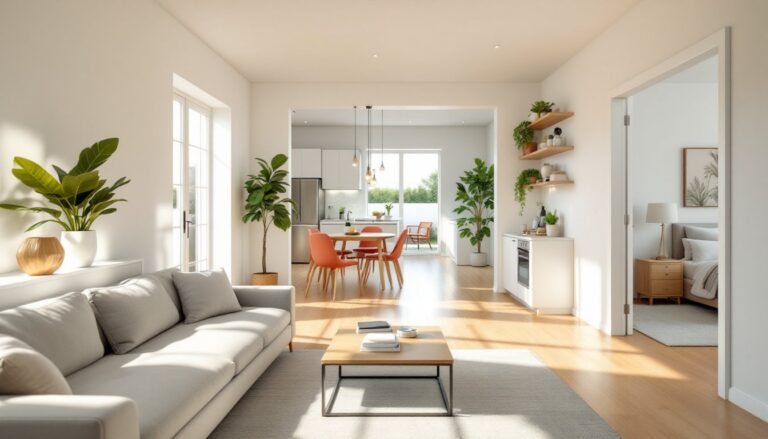
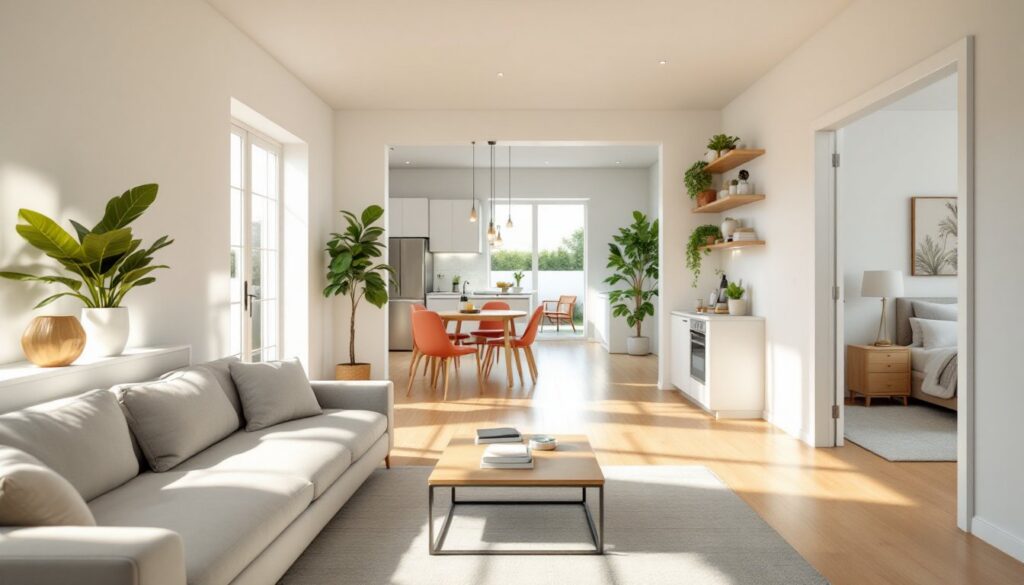
Open-concept designs combine the kitchen, dining, and living areas into one continuous space. This style works well for families who want visual connectivity and easier supervision of children. It also makes smaller homes (under 1,500 square feet) feel larger.
The trade-off? Noise, cooking smells, and clutter are harder to contain. Open layouts also limit wall space for furniture and cabinetry. Homeowners who cook frequently or need quiet zones for work may find traditional layouts more practical.
Traditional layouts use walls to define each room. This approach offers better sound insulation, climate control (heating and cooling individual rooms is more efficient), and distinct spaces for different activities. It’s a better fit for households with varied schedules or anyone sensitive to noise.
There’s middle ground, too. A semi-open layout might feature a half-wall or breakfast bar separating the kitchen from the living area, or pocket doors that can close off spaces when needed. These hybrid approaches show up frequently in floor plan critiques where homeowners want flexibility without sacrificing structure.
Single-Story vs. Two-Story Configurations
Single-story (ranch-style) layouts spread all living space across one level. They’re ideal for accessibility, no stairs means easier aging-in-place and safer conditions for young children. Ranch homes also simplify HVAC and plumbing runs, which can reduce construction and maintenance costs.
The downside is footprint. A 1,500-square-foot single-story home requires more lot space than a two-story of the same size, which can be a deal-breaker in urban or high-cost areas.
Two-story layouts maximize vertical space, making them suitable for narrow lots. The most common configuration places common areas (kitchen, living, dining) on the first floor and all bedrooms upstairs. This naturally separates public and private zones and reduces noise between levels.
Another option is a split-level or 1.5-story design, where the primary bedroom sits on the main floor and secondary bedrooms are upstairs. This works well for households with older adults who want to avoid stairs daily but still need space for kids or guests on a second level.
Room Placement Strategies for Privacy and Flow
Primary bedroom placement sets the tone for the entire layout. Locating it at the opposite end of the house from secondary bedrooms, often called a split-bedroom plan, offers maximum privacy. This is especially useful for households with teenagers, overnight guests, or home offices in the third bedroom. The primary suite should have direct access to a full bathroom, ideally with a door that doesn’t open directly into the kitchen or living room.
For secondary bedrooms, grouping them together with a shared hallway and bathroom simplifies plumbing and creates a distinct “kids’ wing” or guest zone. If one of those bedrooms will function as an office, place it near the front of the house with a door that closes. This keeps work separate from household traffic and makes it easier to take video calls without background noise.
Bathroom placement matters more than most people think. A powder room (half bath) near the main living area prevents guests from wandering into private spaces. For a three-bedroom home, two full bathrooms are standard, one en suite with the primary bedroom and one shared between the other two bedrooms. If budget allows, a Jack-and-Jill bathroom (shared between two bedrooms with doors from each) offers privacy without duplicating fixtures.
Kitchen and laundry location also impacts daily flow. Kitchens should connect to both the dining area and an exterior door (for groceries and trash). Laundry rooms work best near bedrooms or bathrooms, not in a basement or garage that requires hauling baskets through the house. If space is tight, a stacked washer-dryer in a closet near the primary bedroom is far more practical than a distant laundry room.
Consider how people move through the space during daily routines. A layout that forces morning bathroom traffic through the kitchen, or requires walking through the living room to reach bedrooms, creates unnecessary friction. Good circulation means you can move from the garage to the primary bedroom, or from a bedroom to a bathroom, without crossing the main living area.
Maximizing Space in Your 3 Bedroom Layout
Built-ins and custom storage make a massive difference in smaller layouts. Instead of freestanding furniture that eats floor space, consider built-in bookshelves, window seats with storage underneath, or a mudroom bench with cubbies. These elements are especially effective in transitional spaces, entryways, hallways, and under stairs.
A well-designed closet can eliminate the need for a dresser. Walk-in closets (minimum 4×4 feet for functionality) with built-in shelving and double-hang rods use vertical space efficiently. For secondary bedrooms, a reach-in closet with a closet system (adjustable shelves, rods, and drawers) offers more storage than a standard single rod and shelf.
Multi-functional rooms are essential in a 3 bedroom home. The third bedroom might serve as a guest room 10 days a year, the rest of the time, it’s wasted space unless it doubles as an office, gym, or craft room. A Murphy bed or sleeper sofa paired with a desk and shelving makes the room useful daily. If the room will primarily be an office, make sure there’s at least one dedicated 20-amp circuit for computers and equipment (per NEC requirements).
Open shelving and minimal doors can make spaces feel larger. Replacing a closet door with a curtain or removing upper kitchen cabinets in favor of open shelves creates visual flow. But, this only works if the homeowner is disciplined about clutter, open storage exposes everything.
Natural light expands perceived space more than any other single factor. If renovating, enlarging windows or adding a skylight in a hallway or bathroom makes a measurable difference. For new builds, orienting the home so that living areas face south or west maximizes daylight. Clerestory windows (high, narrow windows near the ceiling) bring light into interior spaces without sacrificing privacy.
Finally, many homeowners inspired by design platforms overlook the importance of scale. Oversized furniture in a small room makes it feel cramped. A sectional sofa might look great on home design shows, but in a 12×14-foot living room, a standard sofa and chairs will leave more usable floor space. Measure twice, buy once.
Conclusion
A smart 3 bedroom house layout isn’t about square footage alone, it’s about thoughtful placement, realistic planning, and understanding how a household actually uses space. Prioritize circulation, separate public and private zones, and build in flexibility for how rooms will evolve. Whether working with an architect on a custom build or rethinking an existing floor plan, these principles turn a generic layout into a home that works as hard as its owners do.