Table of Contents
ToggleLight grey has become the go-to neutral for modern home exteriors, replacing beige and tan as the preferred base color for homeowners aiming for clean, contemporary curb appeal. It works across architectural styles, from sleek flat-roof modernist boxes to craftsman-influenced builds, without dating a home the way bolder color choices can. Grey’s versatility lies in its ability to shift tone depending on lighting, adjacent materials, and accent colors, making it forgiving for DIYers who want a polished look without hiring a designer. This guide breaks down the best light grey paint colors, effective accent pairings, and material combinations to help homeowners confidently execute a modern grey exterior scheme.
Key Takeaways
- Light grey modern house exterior color schemes offer a versatile, timeless neutral that works across architectural styles and hides imperfections better than stark white.
- Test paint samples like Repose Grey or Agreeable Grey on multiple sides of your home for at least three days to account for how grey shifts throughout daylight and different lighting conditions.
- Pair light grey exteriors with black, charcoal, or white accent trim and doors to define character—high contrast creates contemporary drama while subtle layering delivers minimalist appeal.
- Combine materials strategically using the 60-30-10 rule: 60% main siding, 30% secondary texture or accent, and 10% trim to achieve visual interest without a busy appearance.
- Prioritize dark charcoal or grey roof colors and proper ventilation when adding wood cladding or stone veneer over siding to prevent moisture damage and ensure long-term durability.
- Light grey absorbs less heat and hides weathering better than darker shades, supporting both energy efficiency and resale value as a safe, current design choice for modern homes.
Why Light Grey Is the Perfect Choice for Modern Home Exteriors
Light grey functions as a neutral backdrop that doesn’t compete with landscaping, architectural details, or neighboring homes. Unlike white, which can appear stark or show every streak of dirt, light grey hides surface imperfections and weathering better over time. It also reflects less glare than bright whites, making it easier on the eyes in sun-heavy climates.
From a design standpoint, grey pairs well with both warm and cool accent tones, giving homeowners flexibility without repainting trim or replacing roofing to match a color shift. It works equally well on fiber cement siding, stucco, brick veneer, or board-and-batten installations. For resale value, grey reads as current without being trendy, buyers recognize it as a safe, modern choice that won’t require immediate updates.
One practical advantage: light grey doesn’t absorb as much heat as darker shades, which can help with energy efficiency on south- and west-facing walls. If the home uses vinyl siding, this matters, darker colors can cause warping or buckling in high temperatures. Always check the siding manufacturer’s approved color range and warranty restrictions before committing to a shade.
Best Light Grey Paint Colors for Modern House Exteriors
When selecting a light grey for exterior use, test samples on multiple sides of the house. Grey shifts dramatically based on natural light, a cool-toned grey can look blue in morning light or lavender at dusk. Most successful modern schemes use greys with a neutral or warm undertone to avoid the sterile, institutional feel of straight blue-grey.
Popular light grey exterior paint options include:
- Repose Grey (SW 7015): A true neutral grey with no strong undertones. Works well in most climates and lighting conditions. Coverage is typically 350–400 square feet per gallon on smooth surfaces like fiber cement: textured stucco may reduce that to 250–300.
- Agreeable Grey (SW 7029): Slightly warmer than Repose, with a greige (grey-beige) lean. Reads as soft and approachable rather than industrial.
- Stonington Grey (HC-170, Benjamin Moore): A cooler grey with subtle blue undertones. Best suited for homes in bright, sunny climates where the blue won’t read as cold.
- Chelsea Grey (HC-168, Benjamin Moore): Darker than true “light” grey but still in the mid-tone range. Pairs well with bright white trim for high contrast.
Before ordering gallons, paint 2×2-foot test boards (use scraps of siding or primed plywood) and mount them on different elevations. Live with them for at least three days, checking morning, midday, and evening light. This step prevents costly repaints and ensures the grey reads the way the homeowner expects.
Stunning Accent Color Pairings for Light Grey Exteriors
Accent colors define the character of a grey exterior. The same base grey can read as coastal, industrial, or traditional depending on trim and door choices. Homeowners should select accents based on the home’s architectural style and the mood they want to project.
White and Cream Accents
White trim is the default modern choice, it provides crisp contrast without introducing additional color complexity. Bright white (not off-white) works best for a high-contrast, contemporary look. Use it on window casings, fascia, soffits, and corner boards. For a softer approach, cream or warm off-whites like Swiss Coffee (OC-45) or Alabaster (SW 7008) reduce visual sharpness while maintaining definition.
White or cream also works well on front doors if the goal is a monochromatic, minimalist aesthetic. Pair it with brushed nickel or matte black hardware to keep the look cohesive. One caution: white trim shows dirt and mildew more readily than darker accents, so plan for annual power washing or touch-ups, especially on north-facing elevations that don’t get much sun. Homes with architectural wood accents often use white trim to let natural tones stand out.
Black and Charcoal Contrasts
Black accents deliver drama and modernity. Use satin or matte black on front doors, garage doors, window frames, and metal railings. Glossy black can look dated and shows fingerprints and water spots more easily. Charcoal grey (a few shades darker than the main body color) works as a softer alternative, offering contrast without the starkness of true black.
Black trim pairs especially well with horizontal siding profiles (like shiplap or board-and-batten) and metal roofing. It’s a strong choice for modern farmhouse or industrial-style homes. But, black absorbs heat, so avoid it on vinyl components or south-facing surfaces in hot climates, warping and fading are real risks. If the home features dark trim, it’s worth considering dark-toned window grilles or shutters to create visual rhythm across the façade.
Choosing the Right Trim, Door, and Roof Colors
Trim color establishes the overall contrast level. For high contrast, use bright white or black. For low contrast, choose a trim color one or two shades lighter or darker than the main grey, this creates a subtle, layered look common in Scandinavian and minimalist design.
Front doors offer an opportunity for personality. Popular modern door colors for light grey exteriors include:
- Navy blue: Adds depth without being loud. Works well with both warm and cool greys.
- Charcoal or black: Monochromatic and sleek.
- Natural wood stain: Softens the palette and introduces warmth. Use a clear or semi-transparent stain to let wood grain show.
- Sage green or muted teal: On-trend for 2026, these colors add a nature-inspired accent without clashing with grey.
Roof color is often dictated by existing materials, but if replacing, dark charcoal shingles are the safest match for light grey exteriors. Black or very dark brown can work but may create too much contrast on homes with minimal trim. Light grey or weathered wood-look metal roofing is another modern option, especially for contemporary or coastal builds. Avoid red, orange, or terracotta tones unless the home has a Mediterranean or Spanish Revival style, they clash with cool-toned greys.
Material Combinations That Complement Light Grey
Modern grey exteriors benefit from material layering, using two or three textures to add visual interest without color. Common combinations include:
- Smooth stucco + natural wood accents: Grey stucco provides a clean backdrop: wood (cedar, ipe, or thermally modified pine) on entry walls, shutters, or garage doors adds warmth. Seal wood with a UV-resistant finish to prevent greying and splitting.
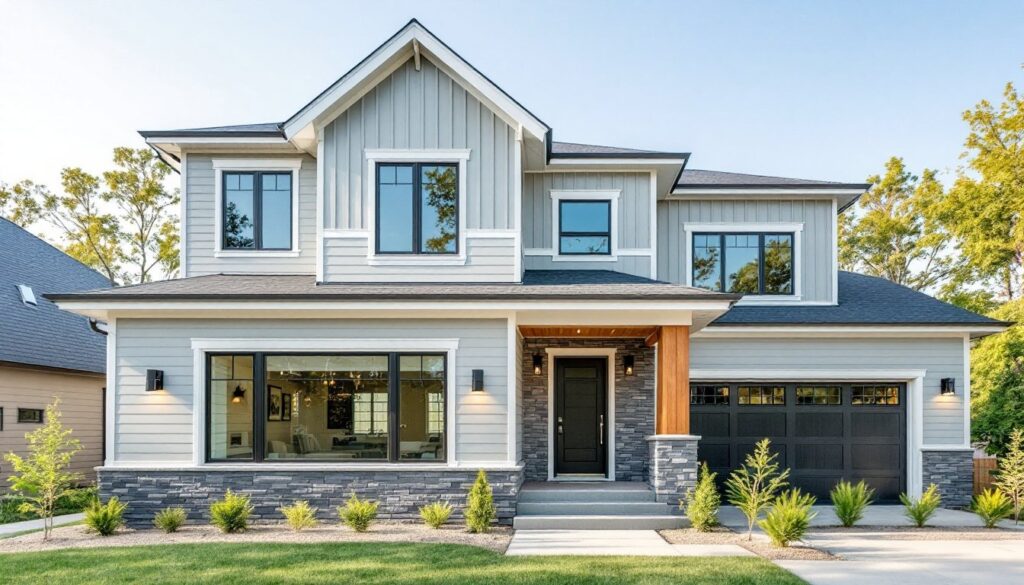
- Horizontal lap siding + stone veneer: Use light grey fiber cement siding on upper floors and stack stone or ledgestone in charcoal, grey, or earth tones on the foundation or chimney. This grounds the design and ties the home to its landscape.
- Board-and-batten + metal panels: Vertical board-and-batten in light grey pairs well with standing seam metal roofing or cladding in darker grey or black. This combo works especially well on modern farmhouse or barn-inspired designs.
- Brick + painted siding: If the home has existing brick, paint upper stories or gables in light grey and leave brick natural. Grey mortar or painted white brick also coordinates well with grey siding. Note: painting brick is a permanent decision, removing paint later damages the surface.
When mixing materials, keep the total number of finishes to three or fewer (not counting the roof). More than that risks a busy, disjointed appearance. Use the 60-30-10 rule: 60% main siding color, 30% secondary material or accent, 10% trim and details. Many successful modern exterior designs rely on this proportional balance.
Safety note: If installing stone veneer or wood cladding over existing siding, ensure proper ventilation and moisture barriers (housewrap, drainage plane) are in place. Trapped moisture leads to rot and mold, especially behind horizontal lap siding. For substantial material changes, like adding brick veneer or stone, consult a structural engineer to confirm the foundation and framing can handle the added weight. Most wood-frame homes aren’t designed for full masonry cladding without reinforcement.
Finally, consider how materials age. Natural wood greys over time unless maintained: fiber cement holds color well but may need repainting every 10–15 years depending on climate and paint quality. Metal panels can dent but don’t rot. Choose materials that match the homeowner’s willingness to maintain them. Homes featured on design-focused platforms like Home Bunch often showcase how layered materials create depth in modern grey schemes.