Table of Contents
ToggleLearning how to set up smart home devices doesn’t require technical expertise. Millions of homeowners now control their lights, thermostats, and security systems with simple voice commands or smartphone taps. This guide breaks down the entire process into clear, manageable steps. Whether someone wants to install their first smart speaker or build a fully connected home, the fundamentals remain the same. The right equipment, a stable Wi-Fi connection, and a bit of patience are all it takes to get started.
Key Takeaways
- Setting up smart home devices requires only a stable Wi-Fi connection, a smartphone, and patience—no technical expertise needed.
- Choose one ecosystem (Amazon Alexa, Google Home, or Apple HomeKit) and stick with it to simplify device integration.
- Start with beginner-friendly smart home devices like smart speakers, smart bulbs, or smart plugs before expanding your system.
- Group devices by room and use consistent naming conventions to make voice commands intuitive and easy to manage.
- Secure your smart home by using strong passwords, enabling two-factor authentication, and updating device firmware regularly.
- Connect most smart home devices to a 2.4 GHz Wi-Fi network for better reliability and faster response times.
Understanding Smart Home Technology Basics
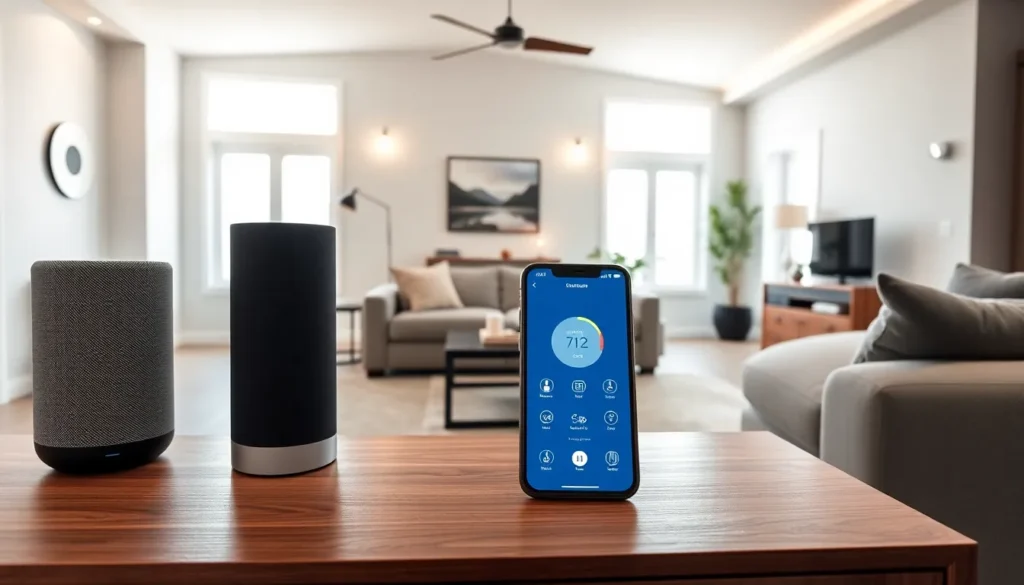
Smart home devices are electronic gadgets that connect to the internet and communicate with each other. They receive commands through Wi-Fi, Bluetooth, or specialized protocols like Zigbee and Z-Wave. A central hub or smartphone app typically serves as the control center.
Three main components make smart home systems work:
- Connected devices: These include smart bulbs, thermostats, cameras, door locks, and appliances.
- A hub or bridge: Some devices need a separate hub to communicate with a home network. Others connect directly to Wi-Fi.
- Control interface: Users manage their smart home devices through voice assistants, mobile apps, or wall-mounted panels.
Most smart home devices fall into one of two categories. Some work independently and only need Wi-Fi access. Others require a dedicated hub that acts as a translator between the device and the home network. Understanding which type someone has purchased saves time during setup.
Popular ecosystems include Amazon Alexa, Google Home, and Apple HomeKit. Each ecosystem offers its own app and voice assistant. Devices labeled “Works with Alexa” or “Works with Google Home” will integrate smoothly with those platforms. Choosing one ecosystem and sticking with it simplifies the setup process considerably.
Essential Equipment You Need to Get Started
Before purchasing smart home devices, a few essentials need to be in place. The foundation of any smart home is a reliable internet connection. Slow or unstable Wi-Fi will cause devices to disconnect or respond sluggishly.
A quality router matters more than many people realize. Budget routers struggle to handle multiple connected devices. Mesh Wi-Fi systems work well for larger homes because they eliminate dead zones and distribute signal evenly across all rooms.
A smartphone or tablet serves as the primary control method. Both iOS and Android support major smart home platforms. Users should download the relevant apps, Amazon Alexa, Google Home, or Apple Home, before unboxing their first device.
Smart home devices themselves vary widely in price and function. Beginners often start with:
- A smart speaker (Amazon Echo, Google Nest, or Apple HomePod)
- Smart light bulbs or smart plugs
- A smart thermostat
Some smart home devices require a hub. Philips Hue lights, for example, need a Hue Bridge connected to the router. Other devices, like many smart plugs, connect directly to Wi-Fi without additional hardware.
Power strips with surge protection help safeguard expensive electronics. A dedicated outlet near the router keeps the setup organized and reduces cable clutter.
Step-by-Step Setup Process for Common Devices
Setting up smart home devices follows a predictable pattern. Most devices require downloading an app, creating an account, and following on-screen prompts. The specifics vary slightly depending on the device type.
Smart Speakers and Voice Assistants
Smart speakers form the hub of many connected homes. Here’s how to set one up:
- Plug the speaker into a power outlet and wait for it to enter pairing mode. A light or sound will indicate readiness.
- Open the corresponding app (Alexa, Google Home, or Apple Home) on a smartphone.
- Tap “Add Device” or the plus icon within the app.
- Select the speaker model from the list.
- Connect to the temporary Wi-Fi network the speaker creates.
- Enter home Wi-Fi credentials when prompted.
- Complete voice training if offered, this helps the assistant recognize individual voices.
Once connected, the smart speaker can control other compatible smart home devices through voice commands.
Smart Lighting and Plugs
Smart bulbs and plugs offer the easiest entry point for beginners. Most brands follow this process:
- Screw in the smart bulb or plug in the smart plug.
- Turn on the device. Many bulbs will blink to indicate pairing mode.
- Open the manufacturer’s app and create an account.
- Tap “Add Device” and select the product type.
- Follow the prompts to connect the device to Wi-Fi.
- Name the device by room (“Living Room Lamp”) for easy identification.
- Link the manufacturer’s app to a voice assistant for hands-free control.
Smart plugs turn ordinary appliances into connected devices. A lamp, fan, or coffee maker plugged into a smart plug can then respond to schedules and voice commands.
Tips for Connecting and Managing Your Smart Home
A few strategies make managing smart home devices easier over time.
Create a naming system. Consistent names prevent confusion. Use room names and device types: “Kitchen Light,” “Bedroom Fan,” “Front Door Lock.” This makes voice commands intuitive.
Group devices by room. All major platforms allow grouping. Saying “turn off the bedroom” will shut down every device in that group simultaneously.
Set up routines and automations. Morning routines can turn on lights, read the weather, and start the coffee maker with a single command. Evening routines might dim lights and lock doors at a set time.
Secure the network. Smart home devices create potential entry points for hackers. Strong, unique passwords on both the router and each device account reduce risk. Enabling two-factor authentication adds another layer of protection.
Update firmware regularly. Manufacturers release updates to fix bugs and patch security vulnerabilities. Checking for updates monthly keeps devices running smoothly.
Keep a device list. As smart home collections grow, tracking what’s connected becomes difficult. A simple spreadsheet with device names, brands, and hub requirements helps troubleshoot problems later.
Wi-Fi congestion can slow response times. Moving smart home devices to a 2.4 GHz network, rather than 5 GHz, often improves reliability, since most smart devices are optimized for that frequency.