Table of Contents
ToggleIf you’re constantly wiping down surfaces or waking up with a stuffy nose, your house probably has a dust problem. Dust isn’t just annoying, it’s a mix of dead skin cells, fabric fibers, pollen, dust mites, and other particulates that circulate through your HVAC system and settle on every horizontal surface. A quality air purifier can cut airborne dust significantly, but not all units are built the same. The right model depends on room size, filter type, and how well it cycles air. This guide walks through what actually matters when you’re shopping for an air purifier to tackle dust.
Key Takeaways
- True HEPA filters are the most effective choice for an air purifier for dusty houses, capturing 99.97% of particles as small as 0.3 microns, while avoiding “HEPA-type” labels that don’t meet this standard.
- Match your air purifier’s CADR dust rating to at least two-thirds of your room’s square footage, and aim for four to five air changes per hour (ACH) to effectively manage heavy dust accumulation.
- Proper placement at least 6–12 inches away from walls and furniture in high-traffic areas maximizes airflow efficiency and prevents the unit from working harder than necessary.
- Replace HEPA filters every 6–12 months in dusty environments and check washable pre-filters monthly, as filters clog faster than manufacturer indicators suggest in dust-prone homes.
- Pair your air purifier with source-control measures like sealing ductwork, upgrading HVAC filters to MERV 11 or higher, and regular vacuuming for optimal dust reduction results.
Why Dusty Homes Need Specialized Air Purifiers
Dust particles range from 0.5 to 100 microns in size. The smallest ones, under 10 microns, stay airborne longer and penetrate deeper into your lungs. Standard HVAC filters catch the big stuff, but they’re not designed to trap fine particulates.
Air purifiers use mechanical filtration to pull in air, trap particles, and push clean air back out. HEPA filters (High-Efficiency Particulate Air) are rated to capture 99.97% of particles as small as 0.3 microns, which includes most household dust, pollen, and pet dander.
Homes with forced-air heating, pets, carpeting, or older construction tend to generate more dust. If you’re in a dry climate or near unpaved roads, outdoor dust infiltrates through windows and doors. Running an air purifier won’t eliminate the need to vacuum or dust surfaces, but it reduces the load and keeps particles from recirculating.
Some purifiers add activated carbon filters to absorb odors or UV-C lights to kill bacteria. Those features don’t help with dust, save your money unless you’re also dealing with smoke or mold. For dust control, focus on filtration efficiency and airflow capacity.
Key Features to Look for in a Dust-Fighting Air Purifier
HEPA Filters: Your First Line of Defense
True HEPA filters are the gold standard for dust removal. Avoid units labeled “HEPA-type” or “HEPA-like”, those aren’t held to the same 99.97% standard and often use less dense media.
Filter lifespan varies by brand and usage, but expect to replace HEPA filters every 6 to 12 months in a dusty environment. Some models use washable pre-filters to catch larger particles and extend the main filter’s life. Check replacement costs before buying, filters for some units run $60 to $100 each, which adds up.
Layered filtration systems start with a coarse pre-filter, then move to HEPA, and sometimes finish with carbon. The pre-filter does the heavy lifting on visible dust and hair, which protects the HEPA layer from clogging prematurely.
Room Size and CADR Ratings Explained
CADR (Clean Air Delivery Rate) measures how many cubic feet per minute (CFM) of filtered air a purifier delivers. It’s tested independently by the Association of Home Appliance Manufacturers (AHAM) and broken into three categories: smoke, pollen, and dust.
For dust, look for a CADR rating at least two-thirds of your room’s square footage. A 300-square-foot bedroom needs a dust CADR of around 200 CFM minimum. Undersized units will run constantly and still struggle to keep up.
Manufacturers list maximum room size, but that’s usually based on two air changes per hour (ACH). For heavy dust, aim for four to five ACH, which means cutting the listed room size in half. A purifier rated for 400 square feet works better in a 200-square-foot space if dust is your main concern.
Adjustable fan speeds let you balance noise and performance. High speed cycles air faster but sounds like a box fan on full blast. Many people run units on high during the day and drop to low at night. Homes that have integrated smart home technology often schedule purifiers to ramp up during peak dust times, like mornings when opening blinds stirs up settled particles.
Where to Place Your Air Purifier for Maximum Dust Removal
Placement matters more than most people realize. Air purifiers work by creating a circulation pattern, dirty air in, clean air out. Blocking the intake or exhaust kills efficiency.
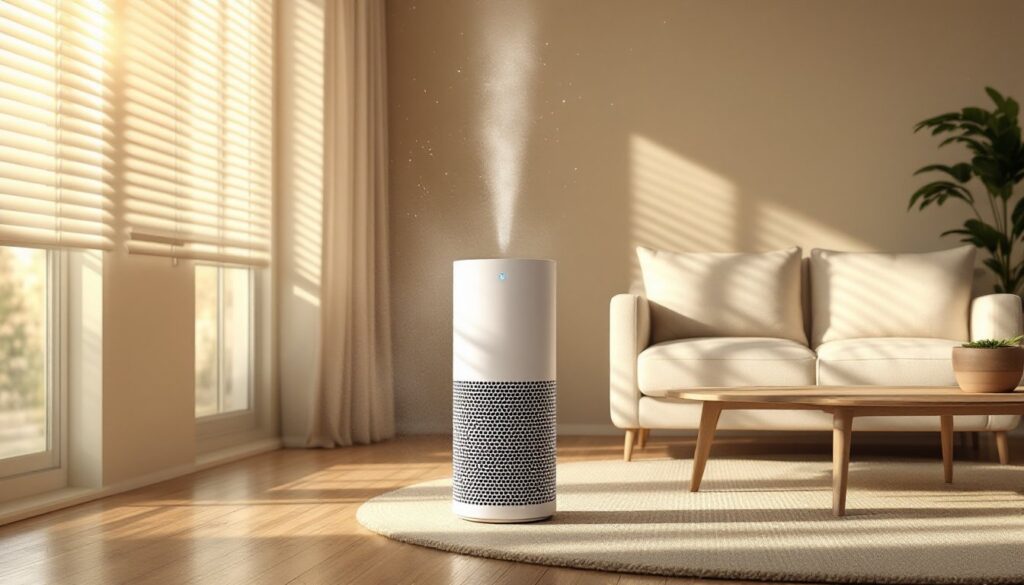
Place the unit at least 6 to 12 inches away from walls and furniture. Most models pull air from the sides or back and push it out the top or front. Cramming a purifier into a corner or against a baseboard chokes airflow and forces the motor to work harder.
Position purifiers in high-traffic areas where dust gets kicked up, living rooms, bedrooms, or home offices. If you have a multi-story home, prioritize the floor where you spend the most time. Moving a single unit between rooms works, but it’s less effective than running dedicated units in each space.
Avoid placing purifiers near HVAC vents or ceiling fans. The competing airflow disrupts the purifier’s intake pattern and sends dust in unpredictable directions. Similarly, don’t put them directly in front of windows during high pollen or construction seasons, you’re just pulling outdoor particulates inside faster.
For bedrooms, place the unit 3 to 5 feet from the bed and run it on low overnight. This creates a clean-air zone around your sleeping area without generating white noise loud enough to wake you. Some households following cleaning routines find that running purifiers during vacuuming sessions captures stirred-up dust before it resettles.
Maintenance Tips to Keep Your Air Purifier Working Effectively
Even the best purifier loses performance if you skip maintenance. Most units have filter change indicators, but those are usually based on runtime hours, not actual dust load. In dusty homes, filters clog faster than the indicator suggests.
Check the pre-filter monthly. If it’s washable, rinse it under warm water and let it dry completely, 24 hours minimum, before reinstalling. A damp filter can grow mold, which defeats the purpose. Disposable pre-filters should be swapped when they look visibly gray or matted.
HEPA filters aren’t washable. Some people try vacuuming them to extend life, but that can tear the pleats or compress the media, reducing efficiency. When airflow drops noticeably or the unit runs louder than usual, it’s time for a new filter.
Wipe down the exterior and intake grilles every few weeks with a dry microfiber cloth. Dust buildup on the outside eventually gets pulled inside. Don’t use cleaning sprays near the intake, residues can coat the filter and create odors.
If your home generates heavy dust from renovations, sawdust, or drywall work, consider running a shop vac with a HEPA filter for the bulk debris and using the air purifier for fine particulates. Consumer-grade purifiers aren’t designed for construction dust and will clog immediately. Residents who’ve tackled dust reduction projects often pair purifiers with source control, sealing ductwork, upgrading HVAC filters to MERV 11 or higher, and eliminating clutter that traps dust.
Keep the unit’s sensors clean if it has auto mode. Optical sensors detect particle levels and adjust fan speed, but dust on the sensor lens causes false readings. Most manufacturers include cleaning instructions in the manual, usually a quick wipe with a cotton swab every month or two.
Conclusion
An air purifier won’t fix poor ventilation or replace regular cleaning, but it’s one of the most effective tools for controlling airborne dust. Prioritize true HEPA filtration, match CADR to your room size, and don’t skip maintenance. With the right unit and smart placement, you’ll spend less time dusting and more time breathing easier.