Table of Contents
ToggleFour Lights Tiny House Company has earned a reputation as one of the most innovative builders in the tiny home movement, combining intelligent design with high-quality construction. Founded by Jay Shafer, one of the pioneers who helped launch tiny living into mainstream consciousness, the company produces custom-built homes that maximize every square inch without sacrificing comfort or style. Whether you’re downsizing, seeking financial freedom, or simply drawn to simpler living, understanding what sets Four Lights apart can help you decide if one of their builds is right for your project.
Key Takeaways
- Four Lights Tiny House Company specializes in custom-built, handcrafted tiny homes ranging from 100 to 500 square feet, designed with traditional craftsmanship and attention to architectural detail rather than mass-production shortcuts.
- The company’s signature design philosophy emphasizes vaulted ceilings, multi-function furniture, generous natural light, and real wood interiors inspired by Craftsman and Cottage architecture, prioritizing livability over trendy aesthetics.
- Four Lights offers completed homes ($60,000–$120,000+), detailed DIY build plans ($500–$1,500), and design consultations to accommodate different budgets and skill levels, with build times of 3 to 6 months.
- Homes are built to IRC Appendix Q or RVIA standards, making them easier to finance, insure, and legally place on property compared to non-compliant alternatives.
- Popular models like the Gambier (130–400 sq ft cottage-inspired design) and the Caboose (100–200 sq ft railway-car-inspired compact home) provide versatile options for downsizing or alternative living.
- Before ordering a Four Lights tiny home, verify local zoning laws, towing capacity for mobile units, utility hookup costs, and insurance options, as site and regulatory issues are the leading cause of tiny home regrets.
What Is Four Lights Tiny House Company?
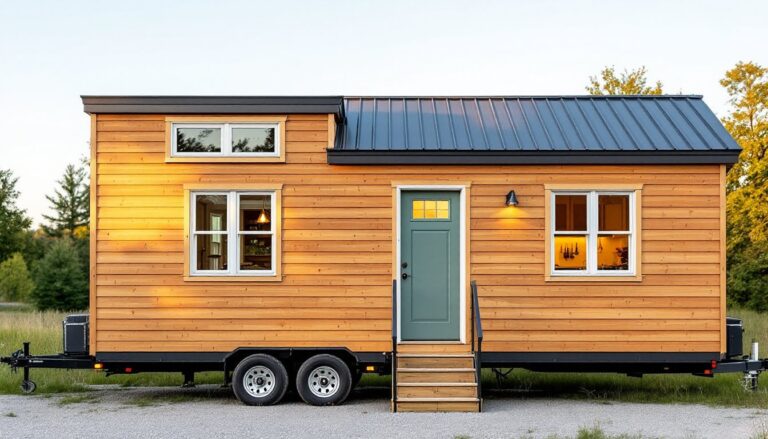
Four Lights Tiny House Company is a California-based builder specializing in handcrafted tiny homes on wheels and foundations. Jay Shafer, who founded Tumbleweed Tiny House Company before starting Four Lights in 2012, brought decades of experience designing compact living spaces that prioritize functionality and craftsmanship.
Unlike many mass-produced tiny home manufacturers, Four Lights focuses on custom builds tailored to individual clients. Each home is constructed using traditional joinery techniques, real lumber framing (not metal studs), and careful attention to architectural detail. Homes range from 100 to 500 square feet, designed to meet IRC Appendix Q standards when built on permanent foundations or RVIA guidelines for towable models.
The company offers both completed homes and detailed build plans for DIYers willing to tackle construction themselves. Their plans include full material lists, cut sheets, and step-by-step instructions, a solid option if you’ve got carpentry skills and access to tools like a miter saw and table saw. Four Lights also provides design consultations for clients working with local contractors.
Design Philosophy and Signature Features
Four Lights homes follow a design philosophy rooted in classical architecture and efficient space planning. Shafer’s background in fine arts and architecture shows in the proportions, trim details, and thoughtful use of vertical space.
Key design elements include:
- Vaulted ceilings: Most models feature cathedral or shed-style roof lines that create an open feel and allow for sleeping lofts without cramped headroom (typically 3’6″ to 4′ clearance in loft areas).
- Multi-function furniture: Built-in benches with storage, fold-down tables, and staircase storage maximize usable square footage.
- Natural light: Generous window placement (often 15-20% of wall area) reduces the need for artificial lighting and makes small spaces feel larger.
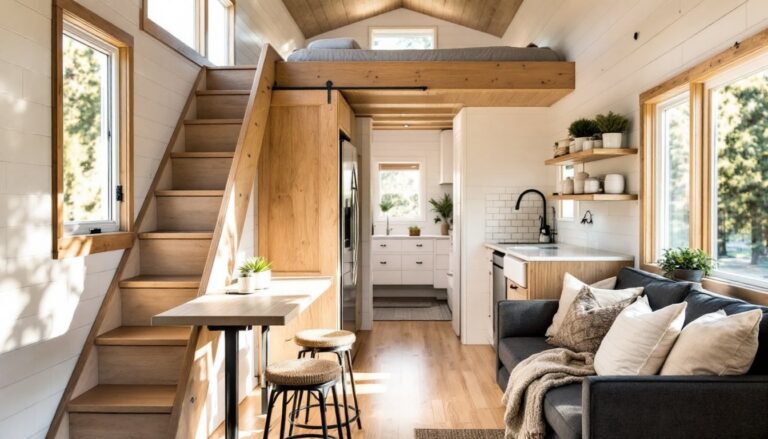
- Real wood interiors: Tongue-and-groove pine or cedar paneling, hardwood floors, and custom cabinetry are standard, no vinyl or laminate shortcuts.
- Traditional framing: Walls are built with 2×4 studs on 16″ or 24″ centers, insulated with spray foam or mineral wool batts (R-13 to R-21 depending on climate), and sheathed with plywood or OSB.
All electrical systems are wired to NEC standards, with 30-amp or 50-lamp RV-style shore power connections for mobile homes or standard 200-amp service for foundation models. Plumbing uses PEX or copper, and most builds include composting toilets or traditional flush systems depending on zoning and client preference.
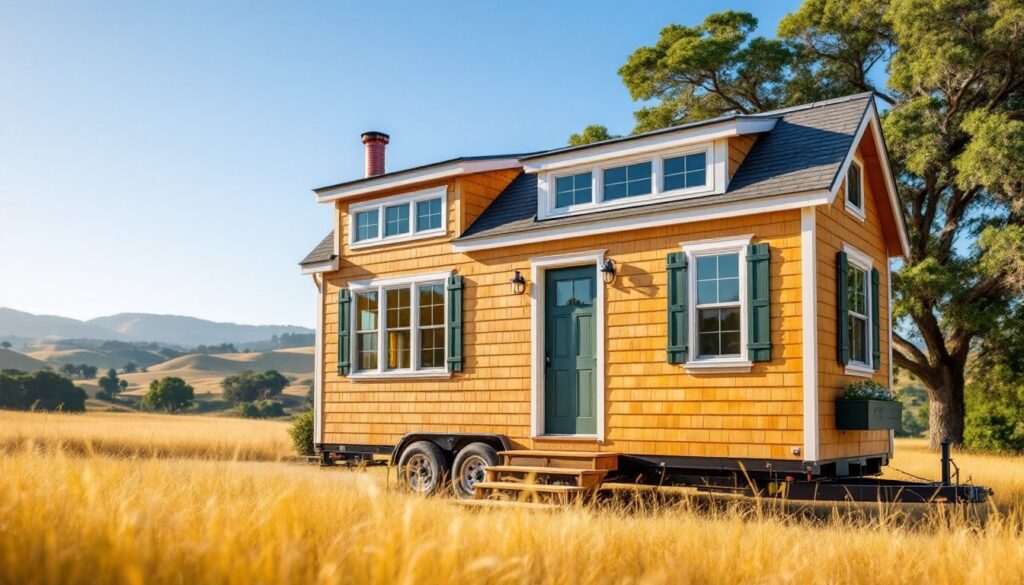
The aesthetic leans toward Craftsman, Cottage, or Colonial styles, plenty of trim work, functional shutters, and gabled rooflines. If you’re drawn to the streamlined tiny homes showcased on Apartment Therapy, Four Lights offers a more traditional alternative with similar space efficiency.
Popular Four Lights Tiny House Models
Four Lights offers several signature models, each available in multiple sizes and configurations. Here are two of their most popular designs.
The Gambier
The Gambier is Four Lights’ best-selling model, inspired by historic cottage architecture. It’s available in sizes from 130 to 400 square feet, with options for one or two sleeping lofts.
Standard features:
- Gabled roof with 8/12 or 10/12 pitch (steeper than many tiny homes, which improves loft headroom)
- Full kitchen with propane range, under-counter fridge, and farmhouse sink
- Bathroom with shower (typically 30″×30″ or 32″×32″ fiberglass pan), composting or flush toilet, and vanity
- Hardwood or engineered wood flooring (3/4″ thickness)
- Sleeping loft accessed by ladder or built-in stairs (stairs add about 12 square feet but eliminate the climb)
The Gambier works well on a triple-axle trailer (for models over 250 sq ft) or permanent foundation. If you’re considering a foundation build, check local codes, most jurisdictions require a frost-protected shallow foundation or traditional stem wall meeting IRC standards. A licensed contractor or structural engineer may be needed for permitting.
This model’s layout is similar to projects featured on Young House Love, where thoughtful renovations transform tight spaces into functional homes.
The Caboose
The Caboose takes design cues from vintage railway cars, with a barrel-vaulted ceiling and compact footprint. Available from 100 to 200 square feet, it’s one of the smallest Four Lights models, ideal for a backyard studio, guest house, or solo living.
Standard features:
- Arched ceiling (creates 7’6″ center height in a low-profile build)
- Kitchenette with two-burner cooktop and mini fridge
- Wet bath (shower and toilet share the same waterproofed space, common in RVs)
- Built-in storage benches and fold-down dining table
- Transom windows along the roofline for ventilation and light
The Caboose is often built on a single-axle or double-axle trailer, keeping the tow weight under 10,000 lbs (requires a 3/4-ton truck or larger for safe towing). Due to its smaller size, some DIYers tackle Caboose builds using Four Lights’ plans. If you’ve worked through projects on Ana White and feel confident with framing and finish carpentry, this model is more approachable than larger builds.
Pricing and Customization Options
Four Lights tiny homes are custom-built to order, so pricing varies based on size, materials, and finishes. As of 2026, expect the following ranges:
- Completed homes: $60,000 to $120,000+ depending on square footage and upgrades
- Build plans: $500 to $1,500 per design (includes material lists and construction drawings)
- Design consultations: $150 to $300 per hour for custom layout work
Completed homes include all labor, materials, appliances, and delivery within a regional radius (typically 200-300 miles: longer hauls incur additional fees). Build time runs 3 to 6 months depending on the queue and customization complexity.
Common upgrades and add-ons:
- Premium finishes: Granite or quartz countertops, tile backsplashes, upgraded fixtures ($3,000–$8,000)
- Off-grid systems: Solar panel arrays (typically 400W to 1,200W), battery banks, and inverters ($5,000–$15,000 depending on capacity)
- Upgraded insulation: Closed-cell spray foam (R-21 walls, R-30 roof) for four-season use ($2,000–$4,000)
- Propane or electric heating: Direct-vent propane heaters or mini-split heat pumps ($1,500–$3,500)
- Custom cabinetry: Built-in desks, Murphy beds, or extra shelving ($1,000–$5,000)
Keep in mind that pricing doesn’t include land, site prep, utility hookups, or permits. Foundation work (gravel pad, concrete slab, or pier-and-beam) can add $3,000 to $15,000 depending on your region and soil conditions. Always get a soil test and consult a local contractor before pouring a foundation, expansive clay or high water tables require engineered solutions.
If you’re buying plans and building yourself, budget for tools, materials, and time. A DIY Gambier build can run $25,000 to $50,000 in materials (assuming you already own basic carpentry tools), but plan for 6 to 12 months of evenings and weekends. Hiring subcontractors for electrical, plumbing, or HVAC adds $5,000 to $15,000.
Why Choose Four Lights for Your Tiny Home Project
Four Lights stands out in a crowded tiny home market for several reasons:
Proven design expertise: Jay Shafer’s decades of experience show in every floor plan. Layouts prioritize flow, storage, and livability, not just Instagram appeal.
Quality construction: Real lumber framing, traditional joinery, and durable finishes mean these homes hold up to daily use and weather. Many owners report 10+ years of trouble-free living.
Customization flexibility: Whether you need a home office, extra sleeping space, or ADA-accessible features, Four Lights works with you to modify stock plans or design from scratch.
DIY-friendly plans: Detailed drawings and cut lists make self-builds feasible for experienced DIYers. Plans include nominal vs. actual lumber dimensions (e.g., a 2×4 is actually 1.5″×3.5″), full electrical schematics, and plumbing diagrams.
Resale value: Well-built tiny homes from recognized builders tend to hold value better than DIY or mass-produced models. Four Lights homes often sell for 70-90% of original cost on the used market.
Code compliance: Homes built to IRC Appendix Q or RVIA standards are easier to insure, finance, and legally place on property. Many jurisdictions are tightening tiny home regulations, so starting with a code-compliant design avoids future headaches.
That said, Four Lights isn’t the right fit for everyone. If you’re looking for an ultra-modern aesthetic, mass-produced affordability, or a turnkey solution with financing included, other builders may suit you better. Four Lights excels at custom, craftsman-quality builds for clients who value design and durability over speed or lowest cost.
Important considerations before ordering:
- Zoning and permits: Check local codes before buying. Some areas restrict tiny homes on wheels or require minimum square footage (often 400-600 sq ft for permanent dwellings). Work with your local building department early.
- Towing requirements: Homes over 10,000 lbs need a heavy-duty truck (F-350, Ram 3500, or equivalent) and may require a CDL in some states. Confirm towing capacity and weight distribution before delivery.
- Utility hookups: Budget for water, sewer, and electric connections. Off-grid setups (well, septic, solar) can cost $15,000 to $40,000 depending on location.
- Insurance: Tiny homes on wheels often require RV insurance: foundation models need standard homeowner’s policies. Shop around, not all insurers cover tiny homes.
Four Lights provides a detailed pre-purchase checklist during consultations to help clients navigate these decisions. Take advantage of it, most tiny home regrets stem from site or zoning issues, not the house itself.