Table of Contents
ToggleThe market for tiny houses on wheels has evolved dramatically, and two-bedroom models now dominate searches from families, remote workers, and retirees seeking flexibility without sacrificing space. Unlike traditional single-bedroom layouts, a 2 bedroom tiny house on wheels balances mobility with the privacy and function most households need. These homes typically span 20–32 feet in length, built on tandem-axle or gooseneck trailers rated for road travel. They’re not RVs or park models, they’re code-compliant, permanent-feeling dwellings designed for year-round living, whether parked on private land, in tiny house communities, or rotated seasonally.
Key Takeaways
- A 2 bedroom tiny house on wheels typically spans 20–32 feet in length with 160–320 square feet of interior space, built on tandem-axle trailers and designed to meet RVIA or NOAH building codes for year-round living.
- Two-bedroom layouts dramatically increase usability for families, remote workers needing office space, and retirees, while a second bedroom typically costs only 10–15% more than a single-bedroom build.
- Ground-level bedrooms suit anyone avoiding ladders, while loft bedrooms maximize vertical space; gooseneck trailers can position master suites above the hitch to preserve main-floor living area.
- Zoning laws, certification paths (RVIA, NOAH, or local permits), and road-legality regulations vary significantly by jurisdiction, so research local requirements before building or purchasing.
- DIY builds cost $30,000–60,000 over 6–12 months, professional builds range $60,000–120,000+, and used models average $40,000–80,000, with smart upgrades like composting toilets, mini-split heat pumps, and solar systems enhancing livability.
- Specialized tiny house insurance ($600–1,200 annually) is essential, as standard homeowners and RV policies typically don’t cover permanent dwelling in a mobile tiny home.
What Is a 2 Bedroom Tiny House on Wheels?
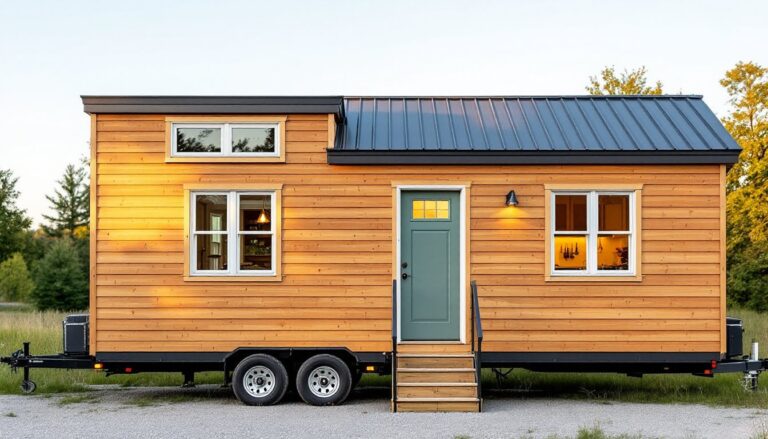
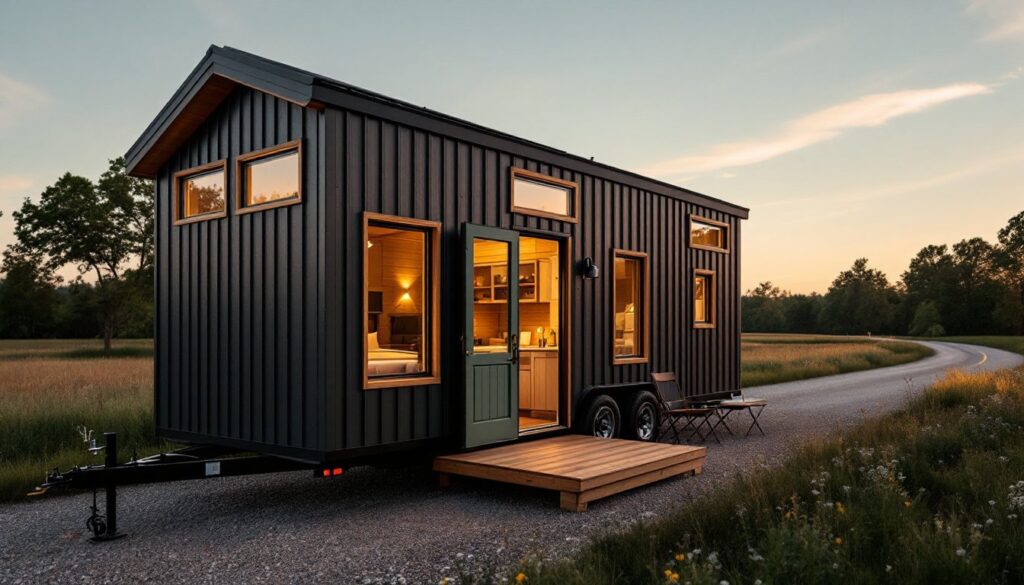
A 2 bedroom tiny house on wheels (THOW) is a permanently attached dwelling built atop a road-legal trailer chassis, designed to meet RVIA, NOAH, or local building codes depending on jurisdiction and intended use. Most range from 20 to 32 feet long and 8.5 feet wide (road-legal max without permits), with interior square footage between 160 and 320 square feet.
The trailer foundation is typically a 14,000–16,000 lb GVWR tandem-axle or gooseneck frame with steel I-beams, not a typical travel trailer chassis. Wall framing uses 2×4 or 2×6 studs on 16-inch centers, sheathed with 7/16-inch OSB or plywood, then wrapped in house wrap and exterior siding (metal, LP SmartSide, cedar, or fiber cement). Insulation values run R-13 to R-21 in walls and R-30+ in the roof, meeting or exceeding standard residential codes.
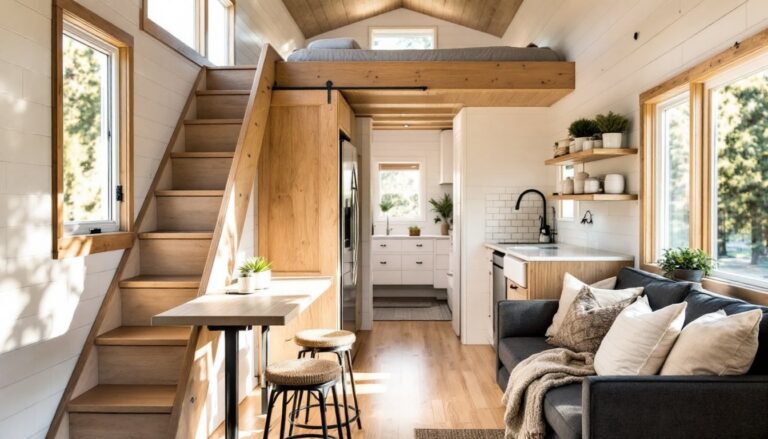
Two-bedroom layouts distinguish these homes from single-loft designs. One bedroom is often a main-floor space (typically 6×8 to 7×10 feet), while the second is a loft accessed by ladder, stairs, or alternating tread stairs. Some models use a gooseneck overhang to create a master bedroom above the hitch, freeing main-floor real estate. Ceilings in living areas range from 10 to 13.5 feet (the legal road height limit), with loft headroom around 3.5 to 4.5 feet, tight, but livable for sleeping.
Why Choose a Two-Bedroom Mobile Tiny Home?
A second bedroom transforms a tiny house from a solo or couple’s retreat into a functional home for families, remote workers needing dedicated office space, or hosts accommodating guests. The added bedroom typically costs 10–15% more than a single-bedroom build but dramatically expands usability.
Families with one child find two-bedroom THOWs ideal: parents claim the main-floor bedroom for accessibility and privacy, while the child uses a loft with built-in storage and play space. Remote professionals convert the second bedroom into a home office, separating work from living areas, critical when your “commute” is ten feet. Retirees and empty nesters appreciate a ground-floor bedroom (no ladder climbing) plus a loft guest room for visiting family.
Mobility remains the defining advantage. Unlike a foundation-built ADU or modular home, a THOW relocates when job markets shift, property sales occur, or lifestyle priorities change. Owners have moved cross-country for under $3–5 per loaded mile using a heavy-duty pickup (F-350, Ram 3500) or professional towing service. Zoning restrictions also play a role: many jurisdictions allow THOWs as temporary dwellings or RVs on private property where permanent structures require costly permits and utility hookups.
Design Layouts That Maximize Space
Efficient layout separates livable two-bedroom tiny houses from cramped experiments. Every square foot does double duty, and traffic flow determines whether the home feels open or claustrophobic.
Main-floor bedrooms typically sit at one end of the trailer, accessed through a pocket door or barn door to save swing space. A 6×8-foot bedroom fits a full-size mattress with 12–18 inches of clearance on three sides, plus a narrow closet or wardrobe. Windows on two walls (code-required egress in bedrooms) provide cross-ventilation and natural light. Some builders position the bathroom as a buffer between the bedroom and living area for added privacy.
The kitchen and living area occupy the center zone, often in an open-concept galley with an L-shaped counter, apartment-size appliances (18–24 inch ranges, under-counter fridges), and a fold-down dining table or breakfast bar. Overhead loft bedrooms preserve this main-floor openness. Storage hides in stair treads, under-bed drawers, and full-height cabinets running to the ceiling.
Many organization strategies from compact apartment living apply here, vertical shoe racks, magnetic knife strips, hanging pot organizers, and drawer dividers that prevent junk accumulation. Every item needs a designated spot, or clutter quickly overwhelms.
Loft Bedrooms vs. Ground-Level Sleeping Areas
Loft bedrooms maximize vertical space by tucking a sleeping area under the roofline. Standard lofts measure 7–10 feet long and the full width of the trailer (8 to 8.5 feet), with 40–50 inches of headroom, enough to sit up, but not stand. Access options include:
- Ladders: Cheapest and space-efficient, but inconvenient for nighttime bathroom trips and unsafe for young children or those with mobility limits.
- Ship’s ladders (alternating tread stairs): Steeper than standard stairs (60–70° pitch) but easier than ladders. Require 3–4 feet of floor space.
- Standard stairs: Most comfortable, occupying 5–8 linear feet. Stair treads often incorporate pull-out drawers or cabinet doors for tools, linens, or pantry goods.
Lofts work well for kids, guests, or adults comfortable with climbing. Ventilation is critical, heat rises, and poorly vented lofts become saunas in summer. Install ridge vents, gable vents, or a low-profile roof fan to circulate air. Skylights or dormer windows add light and emergency egress (check IRC code requirements for bedroom egress, minimum 5.7 square feet of openable area, 24 inches high, 20 inches wide).
Ground-level bedrooms suit anyone avoiding ladders, seniors, those with disabilities, or families with toddlers. The trade-off: they consume precious main-floor space. A gooseneck trailer solves this by extending a bedroom over the hitch, creating a master suite 5–7 feet above the main floor, accessed by a short staircase. Gooseneck designs feel more like traditional homes, with separated sleeping zones and taller living-area ceilings (up to 10 feet).
Building Codes, Zoning, and Legal Considerations
Navigating the legal landscape for a THOW requires research before the first board gets cut. Tiny houses on wheels occupy a gray area between RVs, mobile homes, and permanent structures, and enforcement varies wildly by county.
Certification paths include:
- RVIA (Recreational Vehicle Industry Association): Certifies THOWs as RVs, allowing them in RV parks and on properties zoned for recreational vehicles. RVIA standards cover electrical (based on NFPA 1192), plumbing, and LP gas systems but differ from residential codes. Requires third-party inspection during construction.
- NOAH (National Organization of Alternative Housing): Newer certification specific to tiny houses, aligning closer to IRC (International Residential Code) for permanent dwellings. Accepted in some progressive jurisdictions but not universally recognized.
- Local building permits: Some counties allow THOWs as ADUs (accessory dwelling units) if they meet residential codes, remain under a certain square footage, and connect to permanent utilities. Requires engineered plans, inspections, and often a foundation tie-down.
Zoning restrictions determine where you can park. Many suburban and urban areas prohibit permanent dwelling in anything on wheels, classifying them as “temporary structures” with 120- to 180-day occupancy limits. Rural counties with less restrictive zoning (or none) offer more flexibility. Tiny house communities and THOW-friendly RV parks provide legal parking, utilities, and community amenities, though monthly fees run $300–800.
Road legality matters if you plan to move. Maximum width without a permit is 8.5 feet in most states: height is 13.5 feet: length varies by state (typically 40–53 feet including the tow vehicle). Oversize loads require permits, pilot vehicles, and restricted travel hours. Weigh your finished THOW at a truck scale or CAT scale to confirm it’s within your trailer’s GVWR and your tow vehicle’s rated capacity. Overloading risks blowouts, brake failure, and liability in an accident.
Insurance is tricky. Standard homeowners policies don’t cover THOWs: RV insurance may not apply if you’re using it as a permanent residence. Specialized tiny house insurance covers dwelling, contents, and liability, costing $600–1,200 annually.
Cost Breakdown: What to Expect for Your Budget
Building or buying a 2 bedroom tiny house on wheels is cheaper than a traditional home but not as cheap as social media suggests. Real-world costs break down as follows (2026 estimates, U.S. averages):
DIY build: $30,000–60,000
- Trailer: $4,500–8,000 (new tandem-axle from Iron Eagle, Tiny House Basics, or Tennessee Tiny Homes)
- Framing lumber: $3,000–5,000 (2×4 or 2×6 studs, joists, rafters, sheathing)
- Insulation: $800–1,500 (spray foam, mineral wool, or rigid foam)
- Exterior siding and roofing: $2,500–5,000 (metal panels, LP SmartSide, or cedar shingles: metal or EPDM roofing)
- Windows and doors: $2,000–4,000 (dual-pane vinyl or aluminum: code-compliant egress windows)
- Electrical and plumbing: $2,000–4,000 (wire, panel, outlets, PEX, fixtures)
- Interior finishes: $3,000–6,000 (drywall or tongue-and-groove paneling, flooring, paint)
- Kitchen and bath: $4,000–8,000 (cabinets, countertops, sink, faucet, shower, toilet, vanity)
- Appliances and HVAC: $3,000–6,000 (mini-split heat pump, propane or electric range, ventless dryer, composting or standard toilet)
- Misc. hardware, fasteners, tools: $2,000–4,000
DIY builds demand skills in framing, electrical (potentially requiring a licensed electrician for final inspection), plumbing, and finish carpentry. Expect 6–12 months of weekends and evenings, longer if you’re learning as you go. Those with basic carpentry skills can tackle framing and trim, but hiring pros for electrical and plumbing ensures code compliance.
Professional builder: $60,000–120,000+
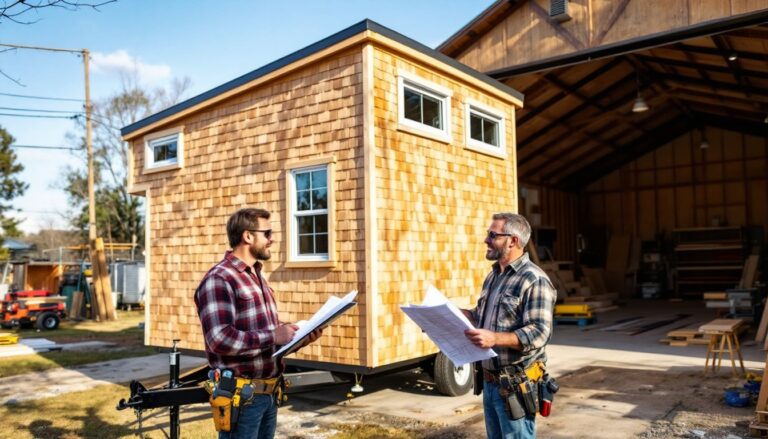
Turnkey THOWs from established builders (Mint Tiny Homes, New Frontier Tiny Homes, Wind River Tiny Homes) include design, permits, labor, and often delivery within a region. Custom two-bedroom models with upgraded finishes, hardwood floors, granite counters, and high-end appliances push toward the upper range. Wait times stretch 6–18 months due to demand.
Used market: $40,000–80,000
Pre-owned THOWs sell on Tiny House Listings, Facebook Marketplace, and Craigslist. Inspect carefully for water damage, trailer rust, improper wiring, and code violations. Bring a contractor or experienced tiny house owner for the walkthrough. Used homes may lack warranties or compliance documentation, complicating insurance and resale.
Smart Features and DIY Upgrades for Modern Tiny Living
Thoughtful features and retrofits make a two-bedroom THOW more livable without inflating costs. Many upgrades suit DIYers with intermediate skills.
Combo washer-dryer units (24-inch vented or ventless models like LG WashTower or Miele W1) fit in a closet or bathroom nook, eliminating laundromat trips. Ventless condensing dryers need no exterior vent but take longer to dry. Budget $1,200–2,000.
Composting toilets (Nature’s Head, Separett) avoid black-water tanks and sewer hookups, using peat moss or coconut coir to compost solid waste. They’re odorless when maintained and legal in most areas. Cost: $900–1,100. Traditional RV or marine toilets with holding tanks work too, requiring dump station access every 7–14 days.
Fold-down furniture, Murphy beds, drop-leaf tables, wall-mounted desks, reclaims floor space. A side-fold Murphy bed (available from Rockler or build your own with hardware kits) transforms a bedroom into a daytime office or play area. Plans and kits run $200–800.
Solar power systems suit off-grid parking. A 2,000–3,000-watt array with lithium batteries and an inverter powers lights, laptop, phone, and small appliances. Add a propane generator for high-draw items like AC, electric heat, or power tools. DIY solar installs cost $5,000–10,000: professional systems double that. Roof-mounted panels must account for road vibration, use reinforced mounting rails and vibration-dampening hardware.
Mini-split heat pumps (12,000–18,000 BTU) heat and cool efficiently, running on 120V or 240V. Brands like Mitsubishi, Fujitsu, and Pioneer offer DIY-friendly models with pre-charged line sets. Installation requires basic electrical and refrigerant-line skills: hire an HVAC tech if you’re uncomfortable. Budget $1,200–2,500.
Smart home integration, Wi-Fi thermostats, smart locks, LED lighting controlled via phone, adds convenience without taking up space. Use Z-Wave or Zigbee hubs for off-grid systems that don’t rely on cloud servers.
Water filtration ensures safe drinking water from any source. A multi-stage under-sink RO system or Berkey gravity filter handles well water, campground fills, or municipal hookups. Cost: $200–400.
Finally, embrace compact living solutions from the apartment design world: magnetic spice racks, over-door organizers, slide-out pantry shelves, and under-sink caddies maximize every inch. The goal isn’t to cram more stuff in, it’s to live comfortably with less, knowing everything you own has a place and a purpose.