Table of Contents
ToggleA 600 square foot tiny house isn’t just downsizing, it’s right-sizing. It’s large enough to live comfortably without feeling cramped, yet compact enough to keep costs, maintenance, and energy use manageable. Getting the floor plan right is critical. Poor layout decisions in a small footprint mean bumping into furniture, wasted square footage, and a space that feels even smaller than it is. This guide walks through proven layout strategies, popular configurations, and the structural considerations that separate a well-designed tiny house from one that feels like a compromise.
Key Takeaways
- A 600 sq ft tiny house floor plan strikes the ideal balance between affordability and comfort, accommodating one to two bedrooms without relying on cramped lofts or convertible furniture.
- Maximize your 600 sq ft layout by minimizing hallways, using pocket doors, and adopting open-concept designs that visually expand the living zone through kitchen islands and zone-defining rugs.
- Built-in storage solutions like stair drawers, underfloor trap doors, and vertical cabinets integrated during the design phase add 25-30% more storage capacity than freestanding furniture.
- Proper ceiling height (9-10 feet), cross-ventilation, and strategic window placement create the perception of significantly more space and reduce reliance on artificial lighting.
- Before building, verify local zoning laws for tiny houses, plan your foundation type carefully, and budget $60,000–$120,000 ($100–$200 per sq ft) with a 15–20% contingency for cost overruns.
- Ceiling height and insulation matter more than floor area in making a small space feel open and comfortable, so invest in closed-cell spray foam and proper air sealing from the start.
Why 600 Square Feet Is the Sweet Spot for Tiny House Living
At 600 square feet, a tiny house crosses the threshold from studio-style living into a legitimate one or two-bedroom home. It’s large enough to include separate sleeping areas, a full bathroom, and a functional kitchen without relying on lofts or convertible furniture.
Most building codes define a habitable room as requiring at least 70 square feet with a minimum dimension of 7 feet in any direction (per IRC Section R304). A 600 sq ft layout comfortably accommodates this while leaving room for circulation, storage, and multi-use zones.
From a practical standpoint, 600 square feet sits below the size where most jurisdictions require complex HVAC zoning. A single mini-split system or through-wall unit can condition the entire space efficiently. Flooring, roofing, and finish materials also stay within the range of standard sheet goods and lumber lengths, reducing waste and cutting costs.
It’s also a buildable size for owner-builders. A 600 sq ft structure on a slab or crawlspace foundation can often be framed and sheathed by two people over a few weekends, assuming basic carpentry skills and the right tool set.
Essential Design Elements for 600 Sq Ft Floor Plans
Every square foot counts in a tiny house, so design decisions need to serve multiple functions. Walls aren’t just partitions, they’re opportunities for built-ins, structural support, and spatial definition without blocking light or airflow.
Ceiling height matters more than floor area in making a small space feel open. Standard 8-foot ceilings work, but bumping to 9 or 10 feet (if budget and framing allow) creates a dramatic difference in perceived volume. Vaulted ceilings or exposed trusses add character and vertical space without adding square footage.
Window placement should prioritize cross-ventilation and natural light. Placing windows on at least two walls, ideally opposite each other, allows passive cooling and reduces reliance on artificial lighting during the day. Avoid clustering all windows on one side, which creates uneven light distribution and limits furniture placement.
Doorways and hallways are space killers. Every 3-foot-wide hallway eats up roughly 18 square feet per 6-foot run. Minimize corridors by using open sightlines and strategically placed pocket doors or barn doors where privacy is needed. Pocket doors save the swing radius of a standard hinged door, freeing up usable wall space.
Open-Concept Layout Strategies
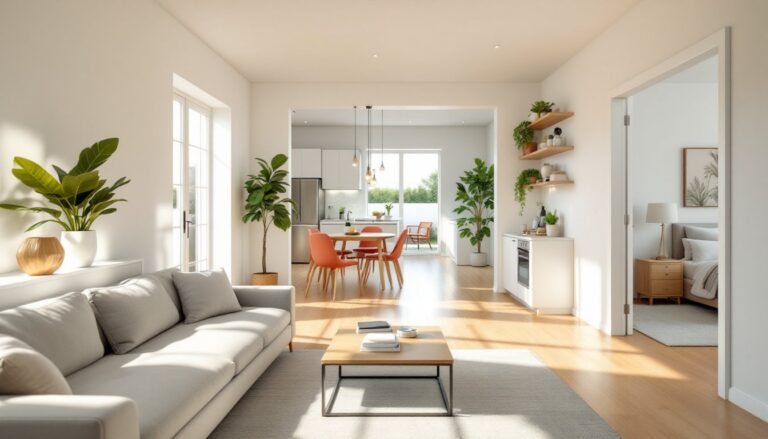
Open-concept designs eliminate unnecessary walls between the kitchen, dining, and living areas. In a 600 sq ft plan, this approach can make the main living zone feel twice as large by borrowing visual space from adjacent areas.
The key is defining zones without physical barriers. Use a kitchen island or peninsula as a subtle divider between cooking and living spaces. An area rug or change in flooring material (e.g., tile in the kitchen transitioning to engineered hardwood in the living room) creates visual separation while maintaining flow.
Keep structural elements minimal. If load-bearing walls are required, use posts or beams to carry loads rather than full-height walls wherever possible. A single LVL (laminated veneer lumber) beam spanning 12 to 16 feet can eliminate a mid-span bearing wall, opening up the entire main floor. Consult a structural engineer or architect if removing or relocating load-bearing elements, guessing wrong can lead to sagging floors or roof failure.
Popular 600 Sq Ft Tiny House Floor Plan Configurations
One-bedroom with flex space: This layout dedicates roughly 120-140 sq ft to a private bedroom, 80-100 sq ft to a full bathroom, and leaves 350-400 sq ft for an open kitchen, dining, and living area. The flex space can serve as a home office, guest sleeping area, or mudroom depending on lifestyle needs.
Two-bedroom compact: For families or those needing dedicated office space, a two-bedroom layout splits the 600 sq ft into two smaller bedrooms (each around 80-100 sq ft), one bathroom, and a combined living/kitchen area. This configuration requires careful planning to avoid a cramped feeling. Consider using sliding or pocket doors to save space, and built-in furniture like Murphy beds or fold-down desks.
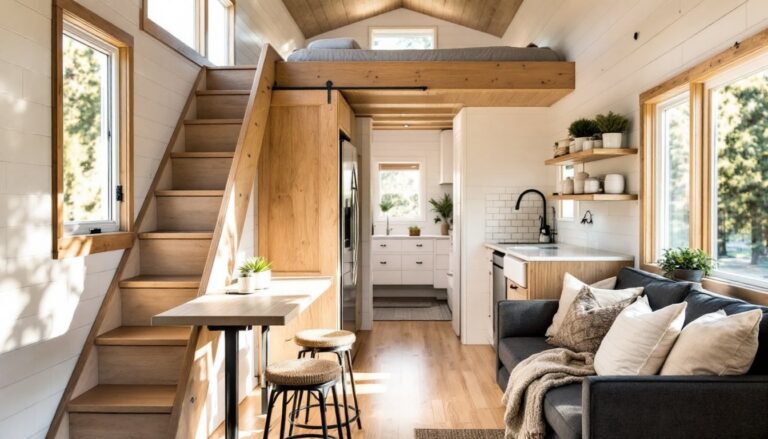
Studio with sleeping loft: Some designs skip ground-level bedrooms entirely, using a loft accessible by ladder or stairs. This frees up the main floor for living and working. Loft sleeping works best with ceiling heights of at least 10 feet total (allowing for a 3-4 foot loft clearance plus 6.5+ feet on the main floor). Note that IRC requires habitable lofts to have at least 35 square feet with a minimum dimension of 5 feet in any direction, plus a ceiling height of at least 6 feet 8 inches over 50% of the loft area.
L-shaped or T-shaped footprints: Instead of a simple rectangle, some 600 sq ft plans use an L or T shape to create defined outdoor transitions, covered porches, or private courtyards. This adds character and outdoor living space without inflating the conditioned square footage. The tradeoff is a more complex roofline and additional exterior corners, which increase framing labor and material costs.
Each configuration has strengths. The one-bedroom with flex space offers the most adaptability. The two-bedroom layout suits families but sacrifices some openness. The loft design maximizes main-floor living space but isn’t ideal for those with mobility concerns or a dislike of ladders.
Maximizing Storage and Functionality in Your Floor Plan
Storage planning should happen during the design phase, not as an afterthought. Built-in solutions integrated into the framing and finish work outperform freestanding furniture in both capacity and aesthetics.
Stair storage: If the plan includes a loft or raised sleeping platform, build storage drawers or cabinets into the stair risers. Each tread can house a pull-out drawer roughly 10-12 inches deep, adding 10-15 cubic feet of hidden storage.
Underfloor storage: If building on a raised foundation or crawlspace, consider incorporating a trap door in the main living area with access to shallow storage bins below. This works well for seasonal items, tools, or emergency supplies. Ensure the trap door is framed with doubled joists and a header to maintain floor integrity.
Vertical cabinets and shelving: Use the full height of walls. Upper cabinets in kitchens and bathrooms should extend to the ceiling, eliminating dust-collecting gaps and adding 25-30% more storage. Open shelving works well for frequently accessed items but requires disciplined organization to avoid visual clutter.
Multi-function furniture zones: Design spaces to serve double duty. A dining table can function as a work desk. A bench along one wall with lift-up seating provides both seating and storage. A kitchen island with shelving or drawers on the living-room side serves as both prep space and a TV console or bookshelf.
Garage or shed bump-out: If the site allows, a small 60-80 sq ft shed or attached garage (not counted in living space) can house tools, bikes, and outdoor gear, keeping the main living area from becoming a storage locker. Frame it as a simple gable or shed-roof structure using 2×4 studs on 24-inch centers to save on lumber.
Key Considerations Before Building Your 600 Sq Ft Tiny House
Zoning and permits: Not all jurisdictions allow tiny houses, especially if they’re on wheels. Some areas classify structures under 700 sq ft as accessory dwelling units (ADUs), which may have different setback, utility, and occupancy rules. Check local zoning ordinances early. If the tiny house is intended as a primary residence, expect stricter requirements than for a guest cottage or backyard studio.
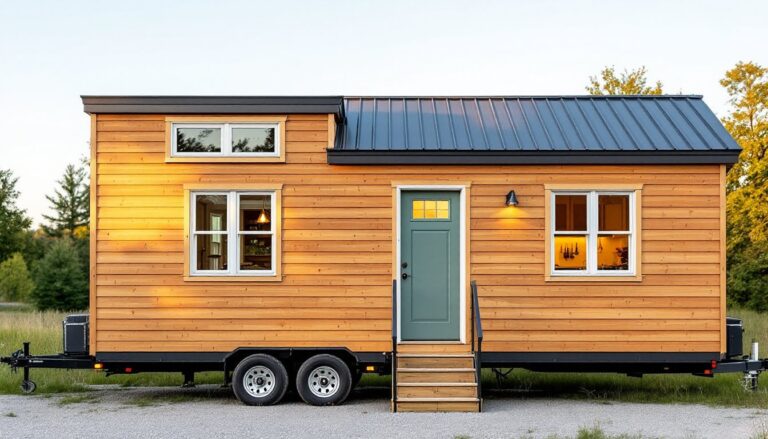
Foundation type: A 600 sq ft tiny house can sit on a concrete slab, crawlspace, pier-and-beam, or trailer chassis. Slabs are cost-effective and work well in warm climates but offer no underfloor access. Crawlspaces add cost but provide utility routing flexibility and some storage. Trailers allow mobility but introduce road-weight limits and require specialized framing techniques to handle travel stresses. Building on a trailer may also limit your ability to secure traditional financing or insurance.
Utilities and systems: Plan for water supply, waste disposal, electrical service, and HVAC early. Most 600 sq ft homes need a 100-amp electrical service minimum to handle kitchen appliances, HVAC, and general loads (per NEC Article 220). If going off-grid, size solar arrays and battery storage based on realistic usage, tiny houses still consume significant power for cooking, heating, and water heating. Consider a tankless water heater to save space and energy, but ensure adequate gas supply or electrical capacity.
Framing and insulation: Proper insulation and air sealing are even more critical in small spaces, where temperature swings are felt immediately. Use closed-cell spray foam or rigid foam board in walls and roof to maximize R-value in minimal thickness. Standard fiberglass batts in 2×4 walls yield R-13, while 2 inches of closed-cell foam hits R-12 with superior air sealing. If using a loft, insulate the roof deck rather than a ceiling plane to keep the loft conditioned.
Cost estimation: Expect a 600 sq ft tiny house to cost between $60,000 and $120,000 depending on finish level, location, and whether you’re hiring out labor or doing it yourself. That’s roughly $100-$200 per square foot. High-end finishes, custom cabinetry, or off-grid systems push costs higher. Basic builder-grade finishes and sweat equity bring it down. Always pad your budget by 15-20% for overruns, small projects have less margin for error, and change orders add up fast.
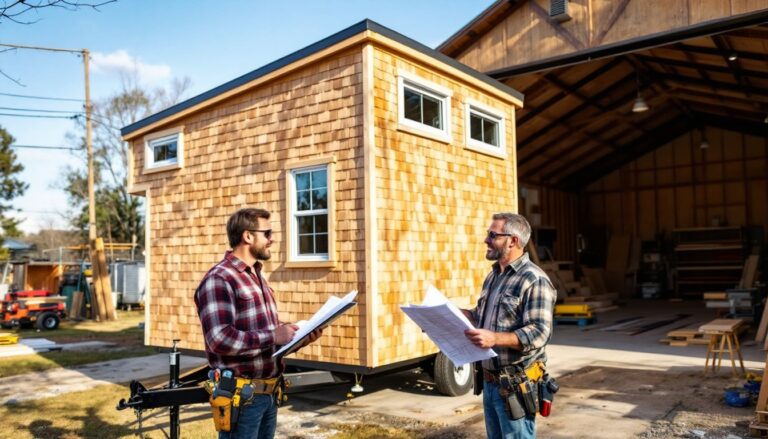
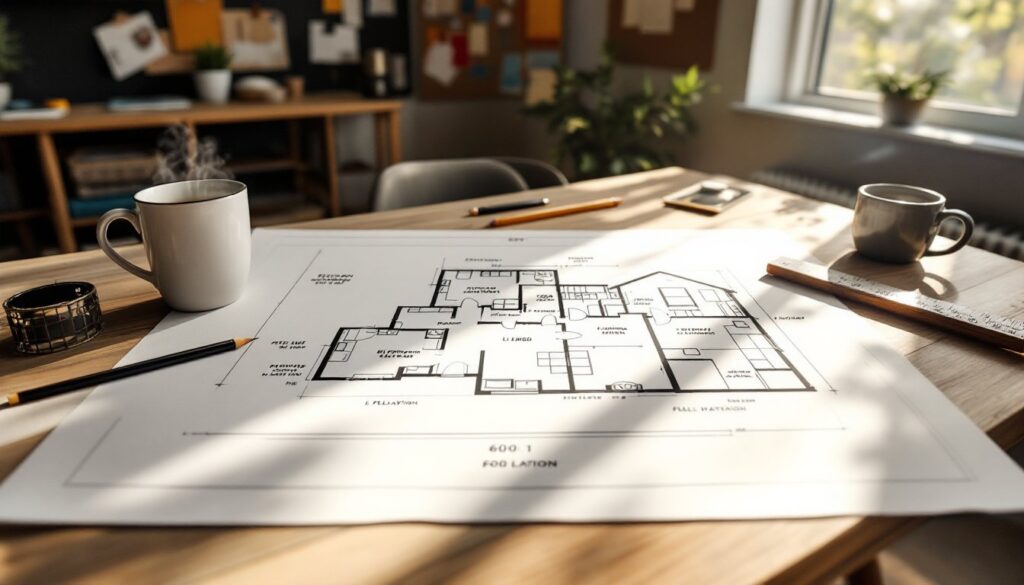
Design help: Unless you have experience reading plans and understanding structural loads, hire a designer or architect familiar with tiny house construction. Many online platforms offer design services and pre-drawn plans that can be adapted to your site and needs. A well-drawn set of plans also streamlines the permitting process and reduces costly mistakes during framing.
Conclusion
A 600 sq ft tiny house floor plan offers a practical balance between space efficiency and livability. Focus on open layouts, smart storage integration, and multi-function zones. Get the design right on paper, understand your local codes, and plan for realistic costs and timelines. Done well, 600 square feet can hold everything needed for comfortable, long-term living.