Table of Contents
ToggleSingle-bedroom tiny houses have exploded in popularity, and for good reason. They deliver the essentials, sleeping space, cooking, bathing, without the baggage of unused square footage and runaway utility bills. Whether someone’s downsizing, building an ADU for rental income, or testing the minimalist waters, a well-designed one-bedroom floor plan makes compact living practical rather than punishing. But here’s the catch: tiny doesn’t mean simple. Every inch demands intentional choices, where the bathroom sits, how the kitchen flows, whether vertical space gets wasted or weaponized. This guide breaks down proven layouts, must-have design features, and the square footage sweet spots that separate clever tiny homes from cramped boxes.
Key Takeaways
- One-bedroom tiny house floor plans deliver significant cost savings, with builds ranging from $20,000–$60,000 and monthly utility bills under $50 in most climates.
- Strategic design elements like 10–13 foot peak ceilings, 15–20% window glazing ratios, and wet core clustering transform single-bedroom tiny homes from cramped to comfortable.
- Loft bedroom configurations maximize main floor space for living and kitchen, while open-concept studio layouts work best for single occupants and offer ADA accessibility.
- The 200–300 square foot sweet spot for tiny house floor plans accommodates real kitchens, separated bathrooms, and either a main-floor bedroom or loft without sacrificing functionality.
- Multi-purpose built-in storage, vertical shelving to ceiling height, and under-stair drawers are non-negotiable for making compact living practical and organized.
- Permanent foundations on tiny house floor plans qualify for traditional mortgages and homeowner’s insurance, while mobile designs offer flexibility but face zoning restrictions and higher financing costs.
Why 1 Bedroom Tiny House Floor Plans Are Perfect for Modern Living
The tiny house movement isn’t just a lifestyle trend, it’s a practical response to housing costs, environmental concerns, and the realization that most people don’t use half their home. Single-bedroom floor plans offer the tightest expression of this philosophy.
Cost efficiency leads the pack. Material costs for a 200–400 square foot structure run a fraction of traditional builds, often between $20,000–$60,000 depending on finishes and whether it’s DIY or contractor-built. Foundation requirements shrink, many single-bedroom designs qualify as trailers (on chassis) or require only minimal pier-and-beam systems for permanent placement. Heating and cooling a compact footprint costs less monthly, with many owners reporting utility bills under $50 even in extreme climates.
Zoning flexibility matters more than most people expect. Many municipalities allow accessory dwelling units (ADUs) on existing residential lots without the same setback and lot coverage rules that govern primary homes. A one-bedroom ADU can house aging parents, generate rental income, or serve as a home office with overnight capability. Always check local ordinances, some jurisdictions cap ADU size at 400–800 square feet, which aligns perfectly with single-bedroom designs.
Maintenance reality can’t be ignored. Fewer square feet mean less roof to reshingle, less siding to paint, and less flooring to replace. A single-bedroom layout typically features one HVAC zone, one water heater, and simplified electrical runs. Someone working full-time can deep-clean the entire structure in an afternoon, not a weekend.
Environmental impact shrinks proportionally. Less lumber, less drywall, less embodied carbon. Smaller roof surfaces make solar panel arrays more affordable, four to six panels can often handle the entire electrical load. Rainwater catchment and composting toilets become feasible upgrades rather than extreme measures.
Essential Design Elements for Single-Bedroom Tiny Homes
Smart tiny house floor plans share common DNA. These aren’t optional flourishes, they’re the features that separate livable from claustrophobic.
Ceiling height makes or breaks the feel. Standard stick-built tiny homes should target 10–13 feet at peak if using a loft, with main floor ceilings at least 8 feet (some codes require this minimum). Vaulted or shed-roof designs create breathing room without adding square footage. Skip the flat 8-foot ceiling, it amplifies the “trailer” feeling no matter how nice the finishes.
Window placement does double duty: light and ventilation. Aim for 15–20% glazing ratio (window area to floor area). South-facing windows capture passive solar heat: north-facing windows provide consistent light without glare. Operable windows on opposite walls enable cross-ventilation, critical in spaces where cooking and sleeping happen within 20 feet of each other. Egress requirements apply if the bedroom is a true sleeping room, check IRC Section R310 for minimum sizes (typically 5.7 square feet of opening, 24-inch height, 20-inch width).
Multi-function zones eliminate wasted space. A dining table that folds against the wall. A couch with under-seat storage drawers. Pocket doors instead of swing doors (which consume 10–12 square feet of clearance arc). Many small space living ideas emphasize furniture that transforms, but in tiny houses, built-ins outperform movable pieces, they’re anchored, won’t shift during transport (for THOW designs), and can be sized to exact dimensions.
Wet core clustering saves on plumbing runs and simplifies drain, waste, and vent (DWV) stacks. Position the bathroom, kitchen sink, and any laundry hookup along one wall or back-to-back where possible. A single 3-inch or 4-inch PVC vent stack through the roof handles all fixtures if planned correctly. This isn’t just cost savings, it’s fewer roof penetrations and less chance of leaks.
Utility access must be deliberate. Crawl spaces under raised foundations should provide 18-inch minimum clearance for future access to plumbing and electrical. Panel boxes belong in accessible spots, not behind a couch that requires disassembly to reset a breaker. Water heater and HVAC equipment needs service clearance per manufacturer specs, typically 24–30 inches in front.
Popular 1 Bedroom Tiny House Floor Plan Layouts
Two layout archetypes dominate single-bedroom tiny house design. Each has clear trade-offs.
Open Concept Studio-Style Plans
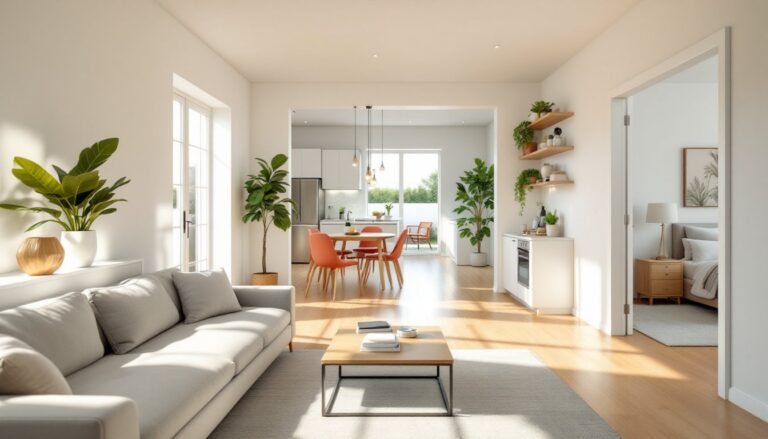
Studio layouts place the bedroom on the main floor, often separated by a partial wall, sliding barn door, or curtain rather than full enclosure. The living, kitchen, and sleeping zones flow together in one continuous space, typically 200–300 square feet.
Advantages: No ladder climbing. Accessibility for older adults or anyone with mobility limits. Simpler HVAC, one zone handles everything. Easier to heat in winter since warm air doesn’t stratify into an unused loft.
Trade-offs: Zero acoustic privacy. Cooking smells and light from the living area invade the sleeping zone. Overnight guests mean someone’s sleeping on a couch in full view of the kitchen.
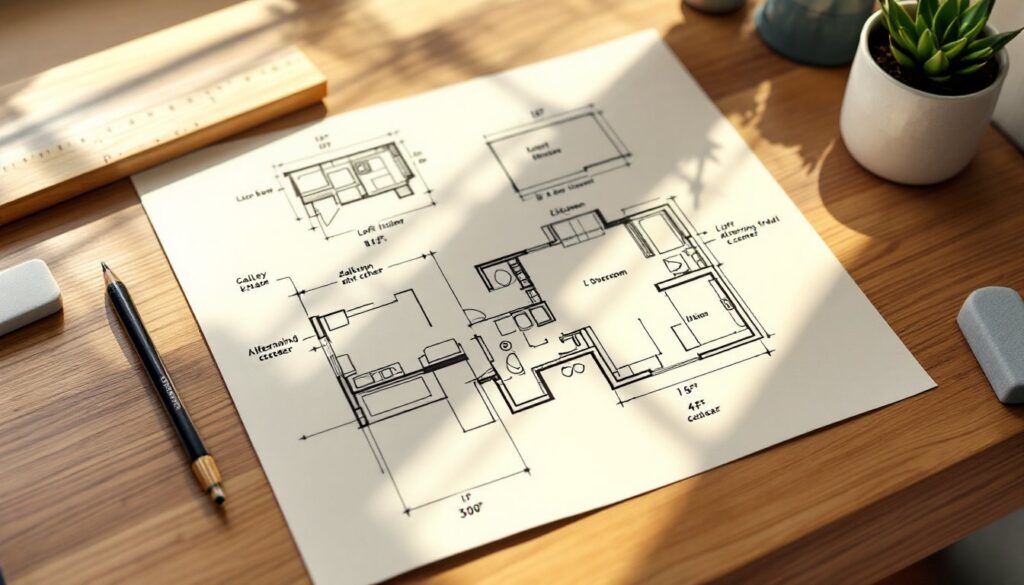
Typical dimensions: A 20-foot by 12-foot footprint (240 square feet) fits a queen bed (60 × 80 inches), compact kitchen galley (6–8 feet of counter), bathroom (typically 5 × 7 feet), and a small living zone with loveseat. Ceiling height of 10–12 feet keeps the space from feeling like a shipping container.
Studio plans work best for single occupants or couples without frequent visitors. The renovation inspiration crowd loves these for backyard ADUs, simple to permit, straightforward to build, and marketable as rentals since they’re ADA-friendly.
Loft Bedroom Configurations
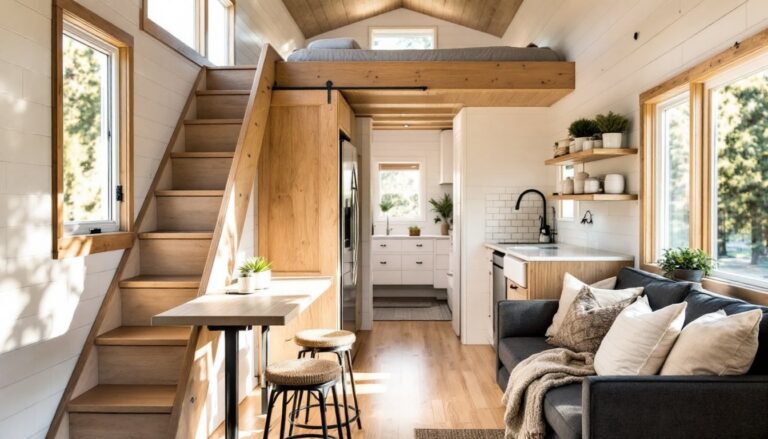
Loft designs stack the sleeping area above the main living space, accessed by ladder, ship’s ladder, or compact stairs. This frees the main floor for living, kitchen, and bath, typically in 250–400 square feet of total footprint.
Advantages: True separation between sleeping and living. Better privacy for couples or when hosting. Main floor feels more spacious without a bed dominating the room.
Trade-offs: Lofts aren’t bedrooms by IRC definition, they’re sleeping lofts, which means no egress window required but also no legal bedroom count for resale or appraisal. Climbing a ladder at 2 a.m. or with an injury isn’t fun. Heat rises, lofts get stuffy in summer without a fan or mini-split head.
Typical dimensions: Loft sleeping areas run 6–8 feet wide by the full width of the house (often 8–10 feet), with 3.5–4.5 feet of headroom at the peak. Anything under 3 feet feels like a coffin. Main floor gains 60–80 square feet by moving the bed vertical.
Stairs beat ladders for daily use but consume 12–16 square feet of floor area. Alternating tread stairs (paddle stairs) save space but require careful foot placement. Ship’s ladders split the difference, steeper than stairs, easier than a vertical ladder.
Loft plans suit younger owners, weekend retreats, or situations where the bedroom is truly just for sleeping. For ADU rentals, studios often rent faster since they accommodate more tenant profiles.
Maximizing Storage and Functionality in Your Floor Plan
Storage makes or breaks tiny living. The difference between 200 square feet of chaos and 200 square feet of calm is where stuff goes when not in use.
Vertical storage is non-negotiable. Upper cabinets should run to the ceiling, that gap above standard 30-inch cabinets wastes 18–24 inches. Use the space for off-season items or bulk goods. Open shelving works if you’re disciplined about aesthetics: closed cabinets hide clutter better.
Stair storage turns dead space into capacity. Each tread can be a drawer (on full-extension slides rated for 100 lbs), or the entire stair assembly can hinge open to reveal a closet underneath. Build stairs with 2×12 stringers and 3/4-inch plywood treads to handle drawer hardware and weight.
Under-floor storage requires planning during framing. A raised platform for the bed (12–18 inches high) creates drawer space underneath for clothing, linens, or tools. Access hatches in the floor (with flush-mount ring pulls) can hide seasonal items or emergency supplies. Frame platforms with 2×6 or 2×8 joists on 16-inch centers to support weight without bounce.
Furniture with purpose beats standalone pieces. A bench with a lift-top seat. A murphy bed (if studio-style) that reveals a desk when folded. Ottomans with interior storage. For tiny house builders, fixed built-ins outperform IKEA hacks, they don’t shift, can be screwed to studs, and survive transport if the house is mobile.
Exterior storage often gets overlooked. A small shed (48–64 square feet) attached to the tiny house holds bikes, tools, propane tanks, and outdoor gear that would otherwise clog the interior. Some designs incorporate a bump-out storage bay accessible from outside, framed into the main structure.
Clothing storage needs realistic planning. A 4-foot closet rod holds about 40 hangers comfortably. If both partners live there, expect 80–100 hangers minimum plus drawer space for folded items. Vacuum storage bags and seasonal rotation help, but the math is the math, either pare down belongings or add built-in storage capacity during construction.
Square Footage Considerations: Finding Your Ideal Size
“How small is too small?” depends on lifestyle, local codes, and whether the home is mobile or permanent.
Under 200 square feet feels tight even for solo occupants. This range works for weekend cabins, hunting camps, or ultra-minimalists willing to live out of a duffel bag. Kitchens shrink to two-burner cooktops and apartment-sized fridges. Bathrooms might be wet baths (shower drains in the floor, everything gets wet). Some jurisdictions won’t permit permanent residence under 120–150 square feet due to habitability standards.
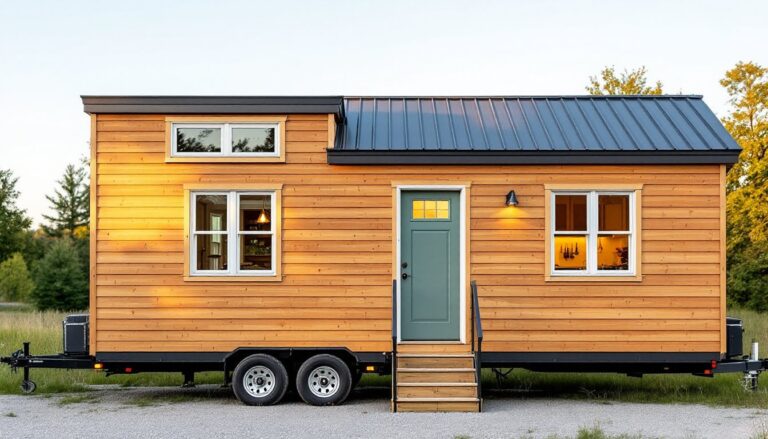
200–300 square feet hits a sweet spot for single occupants or couples comfortable with tight quarters. There’s room for a real kitchen (24–36 inches of counter space, full-size appliances), a separated bathroom (not a wet bath), and either a main-floor bedroom or loft. This range is common for tiny houses on wheels (THOW) since 8.5-foot width × 20–24-foot length trailers fall here.
300–400 square feet allows creature comforts: a small dining table, a couch that’s not also the bed, enough kitchen counter to actually cook. Bathrooms can fit a 30-inch vanity and a 60-inch tub/shower combo. This size also starts to satisfy minimum dwelling unit sizes in some progressive zoning codes. For ADUs, 400 square feet often represents the cap before triggering additional parking, setback, or design review requirements.
Over 400 square feet, the design shifts from “tiny house” to “small house.” Not bad, just different priorities. Framing, insulation, and finish work scale linearly with size, but complexity jumps. A 500-square-foot home needs the same water heater, panel box, and HVAC equipment as a 300-square-foot one, so cost per square foot often drops as size increases in this range.
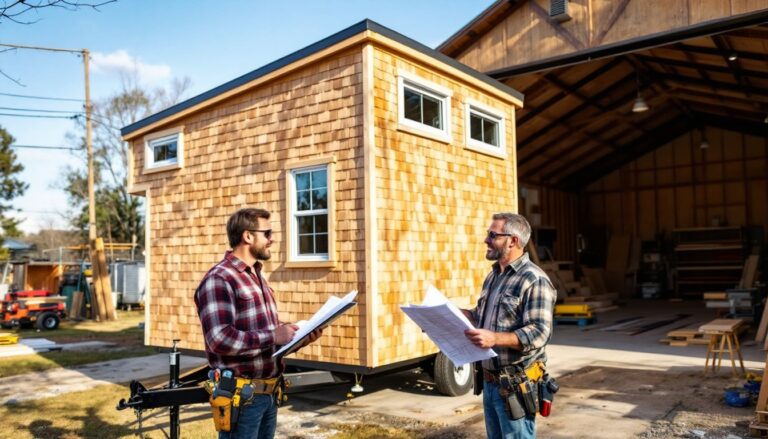
Code considerations vary wildly. The International Residential Code (IRC) Appendix Q provides standards for tiny houses, including advanced construction techniques for energy efficiency, but adoption is local. Some areas mandate minimum habitable room sizes (70–120 square feet), ceiling heights (6.8–7 feet minimum in some loft areas), or emergency egress that a 150-square-foot design can’t physically accommodate. Research before designing.
Permanent vs. mobile changes the equation. Tiny houses on trailers (THOW) often skirt residential building codes by registering as RVs, but many municipalities ban RV habitation or limit it to licensed parks. Permanent foundations trigger full IRC compliance, permitting, inspections, frost footings, and engineer-stamped plans in some cases. The trade-off: permanent tiny homes often qualify for traditional mortgages and homeowner’s insurance, while THOW financing is limited to RV loans or personal loans at higher rates.
Single occupant vs. couple usually defines the floor. One person can tolerate 200 square feet with clever design. Two people realistically need 250–300 square feet minimum to avoid constant negotiation over space. Add a pet, and another 50 square feet helps.